
By Don Sadler
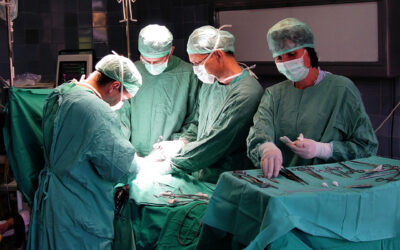
There are few environments where teamwork is more important than in the operating room. Each individual on the perioperative team has unique skill sets and clearly defined job roles, including the surgical technologist.
Also sometimes referred to as a surgical tech or scrub tech, the surgical technologist is responsible for preparing the OR prior to surgery. Their duties span the perioperative continuum and include sterilizing equipment, maintaining a sterile field, setting the sterile table with instruments and supplies, preparing robotic surgical equipment, handing sterile instruments and supplies to surgeons, and cleaning and disinfecting incision sites.
In addition, surgical techs bring patients into the OR, cover them with sterile drapes, make sure they’re comfortable and take patients into recovery after the surgery.

“Surgical technologists are integral members of the surgical team, working under the supervision of surgeons and in collaboration with OR nurses and the anesthesia team,” says Robin Y. Jenkins, CAE, ICE-CCP, the CEO of the National Board of Surgical Technology and Surgical Assisting (NBSTSA). “They play a critical role in patient safety by contributing to successful outcomes through precision, vigilance and collaboration.”
A Technical Focus
Sonja Chambers, MSN, RN, CNOR is a nursing professional development specialist and certified surgical technologist with 35 years of OR experience. She says that surgical techs focus more on the technical aspects of surgery: “Surgical techs have an understanding of anatomy and can anticipate surgical progress in procedures, responding to emergencies as needed.”
Surgical techs are expected to anticipate the needs of surgeons during surgeries, which is one reason they’re sometimes referred to as the surgeon’s “right-hand person.” The more they can anticipate and respond to the surgeon’s needs without being asked, the sooner the procedure can be completed and the patient brought out from under anesthesia.
Perhaps the most important role of the surgical tech is maintaining a high standard of sterile technique during the surgery. According to the Association of Surgical Technologists (AST), surgical techs must be willing to apply the principles of surgical conscience on a daily basis. This includes being another pair of eyes to identify and correct breaks in sterile technique, such as a tear in a glove or a sterile item touching a non-sterile surface.
While OR nurses and surgical techs are both crucial members of the surgical team, their roles and responsibilities are quite different.
“OR nurses can function in both the circulating role and the scrub role, but the surgical tech can only function in the scrub role,” explains Chambers.
Surgical techs generally have limited direct patient interaction.
“Their focus is on the technical and procedural aspects of the surgery and ensuring a safe and efficient surgical environment,” says Chambers. “In essence, while the surgical tech is the expert in the sterile field and instrument management, the OR nurse is the overall patient advocate and coordinator of care within the operating room.
“They both work collaboratively to ensure a successful surgical outcome,” says Chambers.
Jenkins concurs: “Surgical technologists are highly trained professionals who concentrate on the technical and procedural aspects of surgery. During the procedure, they are standing beside the surgeon – passing instruments, anticipating what is needed next and ensuring that everything runs smoothly within the sterile field.”
The surgical tech’s job requires “precision, quick thinking and a deep understanding of surgical procedures and tools,” says Jenkins. “Their diligence and command of the surgical setup directly affect the efficiency and safety of the operation.”
Meanwhile, OR nurses serve as the “central coordinators” of the surgical suite. “They are responsible for patient advocacy and overseeing the broader surgical experience,” says Jenkins. “The circulating nurse manages the environment outside the sterile field, from verifying consent and patient identity to documenting intraoperative events and ensuring all safety protocols are followed.”
The OR nurse also facilitates communication among team members, addresses emergent needs and ensures that everything runs smoothly.
Jenkins stresses that neither the perioperative nurse nor surgical technologist role is more important than the other. “While their duties are different, both practitioners are essential to ensure that the patient receives the safest, most efficient care possible,” she says.
Becoming a Surgical Technologist
According to Jenkins, becoming a surgical technologist requires completion of an accredited program in surgical technology.
“These programs offer rigorous classroom instruction, lab competencies and hands-on clinical experiences,” she says.
After completing a program, graduates may sit for the NBSTSA Certified Surgical Technologist (CST) exam to demonstrate entry level competence.
The NBSTSA’s certification program is accredited by the National Commission for Certifying Agencies (NCCA), the accreditation division of the Institute for Credentialing Excellence (ICE). The program is in compliance with NCCA’s Standards for the Accreditation of Certification Programs.
“In a high-stakes environment like the operating room, certification provides a trusted assurance that a surgical technologist has the knowledge, skills and judgment needed to deliver safe, competent care,” says Jenkins. “It verifies readiness to step into the OR as a reliable and capable team member. The CST certification is more than just a credential – it is a commitment to excellence in surgical outcomes.”
The competencies assessed by the CST exam, says Jenkins, “reflect real-world practice and current surgical standards following the job analysis of the profession. They assess not just textbook knowledge, but practical decision-making and hands-on ability. These are essential qualities in fast-paced surgical settings.”
Most states now require national certification of surgical technologists, notes Chambers.
“Unlike RNs, who obtain a state license, the surgical technologist’s certification is national,” she says.
Common Misunderstandings About Surgical Techs
Angel Pickett, MBA, CST, surgical tech education coordinator at CT State Gateway, points out a few common misunderstandings among OR nurses about the role and duties of surgical technologists.
“One misunderstanding is that surgical techs work under the OR nurses license,” she says. “But this isn’t true: surgical techs work under the direction of the surgeon.”
Another misconception, says Pickett, is that surgical techs only pass instruments.
“This is the furthest thing from the truth! Surgical techs do so much more than just pass instruments, such as anticipating a surgeon’s needs and ensuring a safe surgery while handling specimens, helping with patient positioning and monitoring vital signs.”
Chambers agrees.
“Surgical techs don’t just pass instruments – they serve a vital role in patient safety with the inspection and counting of instruments and equipment and understanding policy and procedures to ensure the best surgical outcomes possible,” she says.
“This negative description (instrument passers) undervalues the depth of knowledge, training and clinical skill acquired by surgical techs,” says Jenkins. “NBSTSA-credentialed surgical technologists are highly trained professionals with specialized expertise who have completed accredited programs in surgical technology, undergone rigorous clinical experiences and achieved national certification.”
“These practitioners have completed education in human anatomy, microbiology, surgical procedures, instrumentation, sterile technique and patient safety,” adds Jenkins.
Melanie Perry, BSN, RN, CNOR, CSSM, believes that misunderstandings between OR nurses and surgical techs can create unnecessary tension in the OR, negatively impacting teamwork and possibly patient safety.
“Ideally, the relationship between OR nurses and surgical techs should be one of teamwork, collaboration and mutual respect,” says Perry. “But this can vary depending on the individuals involved and the culture of the facility. In my experience, surgical cases and the entire workday go much more smoothly when the nurse and the scrub are working together as a team.”
A common misconception Perry has witnessed is that the perioperative nurse makes all the decisions in the OR.
“Yes, the circulating nurse is responsible for the overall case, but decision-making about sterile technique, instrumentation and intraoperative flow often requires input from surgical techs,” she says. “Discounting their input or giving top-down instructions rather than valuing their expertise and insight is a recipe for conflict, tension and increased patient risk.”
Experienced surgical techs often have an excellent understanding of procedural flow, anatomy and surgical steps – “sometimes better than nurses do,” says Perry. “Undervaluing this knowledge can lead to missed opportunities for smoother case progression and anticipating the surgeon’s needs.”
Fully Appreciating the Surgical Tech’s Role
Chambers believes that the role of surgical techs is sometimes underappreciated by other OR personnel.
“Their role and contributions may not be widely understood,” she says. “For example, surgical techs are sometimes viewed at the same level as orderlies or medical assistants. Also, their benefits and compensation are typically much lower than their nurse colleagues.”
“For years I believed that the role of surgical techs was underappreciated, but not anymore,” says Pickett. “Surgical techs are in high demand now. As surgeries become more specialized, so does our profession. Surgical techs have more opportunities than ever with the option to teach, become service leads and move up clinical ladders.”
Chambers agrees.
“Surgical techs today can hold a variety of roles in which their experience and knowledge lend them to be revered as experts,” she says. “These include surgical scheduler, director, coordinator, material manager, supply chain support and even medical device representative.”
Surgical techs can also work in a wide variety of settings outside of hospital ORs.
“These include endoscopy, pain clinics, surgery centers, interventional radiology, labor and delivery, cardiac cath lab, animal hospitals, tissue and organ procurement centers and doctors’ offices,” says Chambers.
During her career, Perry has seen misunderstandings about the role of surgical techs lead to hurt feelings, anger, frustration and arguments in the OR.
“I’ve seen nurses and techs fighting and yelling over different tasks and who is ‘qualified’ to do what task,” she says. “That’s not the way it should be. This insults the training and expertise of the surgical tech, hinders the working relationship and can negatively impact patient safety.”
Jenkins believes that communication and mutual respect are the biggest keys to improved efficiency and teamwork between OR nurses and surgical techs.
“When OR staff understand the full scope of the surgical tech’s training and certification, they are more likely to recognize the value they bring to the team,” she says. “That recognition leads to stronger working relationships, improved morale and better patient care.
“Healthcare institutions and OR leaders must actively promote spaces where nurses, technologists and other team members can learn with and about one another and clarify roles and contributions in the OR,” says Jenkins.
Chambers encourages OR nurses and surgical techs to embrace the team approach without promoting the hierarchy of roles.
“Nurses should be mindful of actions that may increase the surgical tech’s workload,” she says.
“For example, if a case cart system is used for a procedure, ensure the supplies inside the cart have been removed before the end of the procedure,” says Chambers. “This allows the surgical tech to immediately put soiled instruments into the cart without having to deal with the clean items.”
Meanwhile, surgical techs should be willing to aid nurses during crucial times and remain present before and after the procedure, says Chambers.
Your Greatest Ally in the OR
The best way for perioperative nurses to improve the working relationship with surgical techs, says Perry, is by respecting the experience and expertise they bring to the operating room.
“We can show this respect by including techs in discussions about accountability, safety and error prevention and recognizing their contributions to the team,” she says.
“We all have to realize that as a team, we depend on each other to get our cases done quickly and safely,” says Perry. “Any experienced OR nurse will tell you that your scrub is your greatest ally in the operating room. They are a great resource when you aren’t familiar with a surgeon or a particular case.”
Pickett believes that the surgical tech profession has come a long way in recent years.
“As a surgical tech program director, I see how well respected this profession has become and how in demand we are now,” she says. “I just graduated 17 amazing students who are so ready for the workforce with their skills and knowledge.”
Perry urges OR nurses not to underestimate or undervalue surgical techs.
“How you treat surgical techs will set the tone for your whole day,” she says.