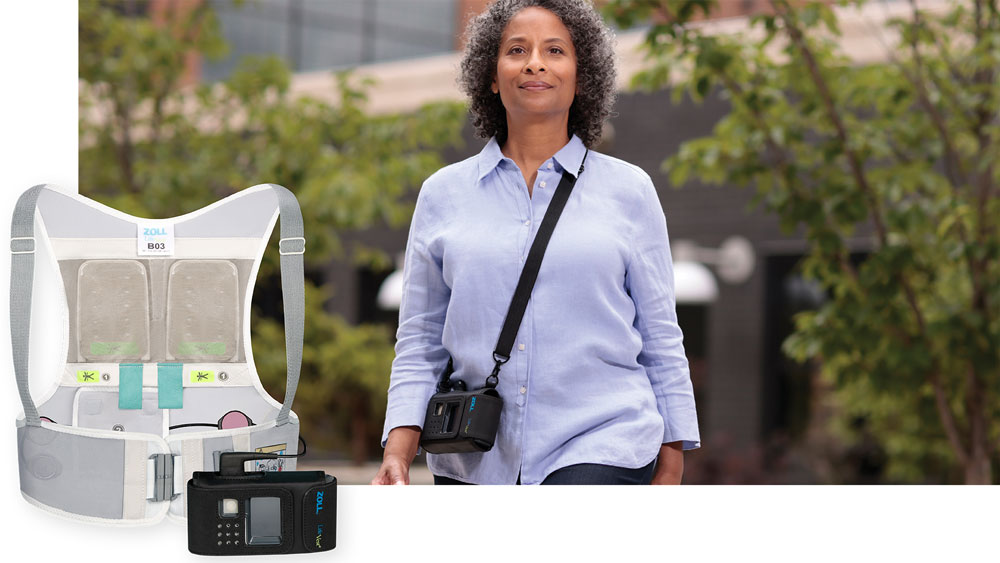
Asahi Kasei announced that ZOLL Medical, an Asahi Kasei company, has launched the next-generation LifeVest wearable cardioverter defibrillator (WCD) in the U.S., and completed the U.S. rollout of the most comfortable LifeVest garment ever.¹ With more than 140,000 patients in peer-reviewed clinical publications and well over one million lives protected, LifeVest is the most used, studied and proven wearable defibrillator.
ZOLL is a global leader in medical devices and related software and diagnostic tools used in critical care. As part of its growth strategy, Asahi Kasei positions Critical Care as a First Priority business, targeting operating income of ¥55.0 billion in fiscal 2027. The latest advancements to the LifeVest WCD reflect ZOLL’s commitment to continuous innovation, and positions ZOLL to continue leading and sustaining growth in the expanding WCD category.

“With its advanced technology, unmatched safety data, and now an even more comfortable garment, LifeVest set the standard for WCDs for patients at temporarily elevated risk of sudden cardiac death,” said Ken Shinomiya, Leader of the Healthcare sector of Asahi Kasei. “The success of the LifeVest WCD positions ZOLL and Asahi Kasei for even more clinical adoption, continued market expansion, durable revenue growth, and strong profitability in the years ahead.”
ZOLL continues to lead the WCD category, driven by more than two decades of engineering expertise, patient feedback, and clinical evidence. More clinicians and patients are choosing the LifeVest WCD, supported by a growing body of clinical data demonstrating the need for sudden cardiac death protection in newly diagnosed heart failure patients with reduced ejection fraction.² Results from the recent landmark SCD-PROTECT study further reinforce the effectiveness of the LifeVest WCD.⁴
The next-generation LifeVest garment is preferred by patients for its enhanced comfort and usability.¹ Built on progressive advancements from prior generations, the garment is designed to support patients in their daily lives outside of the hospital. Enhanced features include lightweight, athleisure-inspired performance fabric, soft plush straps, flat-lock stitching, and the largest range of garment sizes available, accommodating chest measurements from 26” to 56”.
ZOLL also pioneered the use of artificial intelligence in WCDs, introducing an AI-enhanced algorithm in 2018 that reduced false alarms to a median of zero at 90 days.³ The latest generation LifeVest continues to incorporate this AI-enhanced algorithm to support reliable patient protection further.
- Data on file, 20c1184_a01. Garment Comparative Wear Test.
- Based on commercial data as of November 2025.
- Arkles J, Delaughter C, D’Souza B. A novel artificial intelligence based algorithm to reduce wearable cardioverter-defibrillator alarms. J Interv Cardiac Electrophysiol. 2023.https://doi.org/10.1007/s10840-023-01497-w.
- David Duncker, Eloi Marijon, Marco Metra, Olivier Piot, Marat Fudim, Uwe Siebert, Norbert Frey, Lars Siegfried Maier, Johann Bauersachs, Sudden cardiac death in newly diagnosed non-ischaemic or ischaemic cardiomyopathy assessed with a wearable cardioverter-defibrillator: the German nationwide SCD-PROTECT study, European Heart Journal, 2025;, ehaf668,https://doi.org/10.1093/eurheartj/ehaf668