By Dawn Whiteside, DNP, MSN-Ed, RN, CNOR, NPD-BC, RNFA
As 2025 begins, all of us at the Competency & Credentialing Institute (CCI) want to extend our gratitude to everyone who connected with us at conferences throughout the year. Meeting the perioperative community face-to-face gave us invaluable opportunities to share insights, address key questions, and engage in meaningful conversations. In this column, we’re excited to provide answers to some of the most frequently asked questions, making these insights available to our entire community.

There were some uncertainties about the role of some of our certifications. Our primary perioperative certifications include, certified perioperative nurse, which is not an acronym, (CNOR), Certified Surgical Services Manager (CSSM), Certified Ambulatory Surgery Nurse (CNAMB), and Certified Foundational Perioperative Nurse (CFPN). All four of these credentials are Magnet recognized.
The Certified Perioperative Nurse (CNOR) credential is the only accredited certification for perioperative registered nurses. CNOR certification assesses the knowledge and skills of a perioperative nurse with a minimum of two years of clinical practice. Held by more than 40,000 nurses internationally, earning the CNOR is a mark of distinction and demonstrates a commitment to upholding the highest standards in patient safety. The CNOR credential is held for five years when recertification is required.
Are you required to have manager in your title to be eligible for CSSM?
Certified Surgical Services Manager (CSSM) certification is the only credential for perioperative nurse managers, directors, and leaders who oversee personnel, a budget, business unit, or service line. This role also includes those who perform the duties of charge nurse, team leader, and educator. It is not required to have manager in your title to be eligible for the CSSM. Given the confusion that is often caused using the term Manager in the title, CCI is working with a team of SMEs to help determine ways to clarify the requirements for the credential. We look forward to sharing those updates later this year. CSSM certification validates the achievement of the baccalaureate-prepared nurse who demonstrates current proficiency in a perioperative leadership role. It is not required to have a CNOR prior to seeking CSSM certification. The difference between those nurses that already have a CNOR certification is a decrease in the required number of years of work experience in a leadership role and course work content specific to the domains of the CSSM Job Analysis, either contact hours or professional development points activities. Earning the CSSM is a mark of distinction and recognizes the important role perioperative leaders play in delivering safe patient care. The CSSM credential is held for three years when recertification is required.
What is the difference between CNOR and CNAMB?
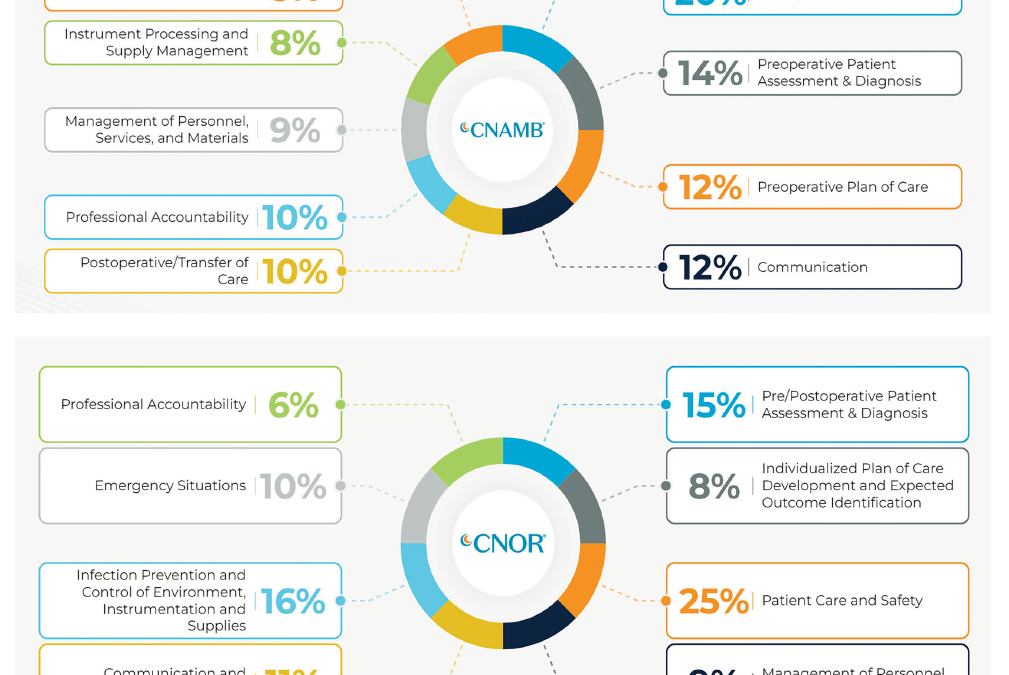
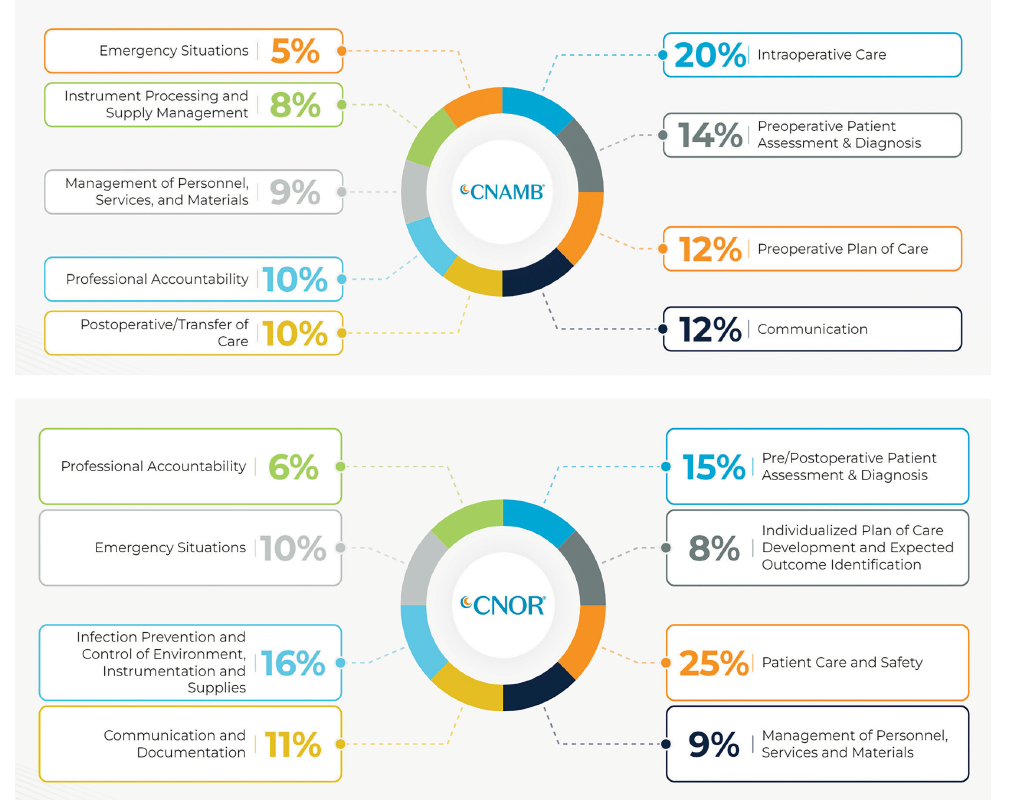
Certified Ambulatory Surgery Nurse (CNAMB) certification is designed for perioperative nurses working in the ambulatory surgery setting who are seeking to improve and validate their professional competencies. The CNAMB certification assesses the knowledge and skills of a perioperative nurse with a minimum of two years of clinical practice in the ambulatory surgery setting. Earning the certification is a mark of distinction and recognizes the important role nurses play in delivering safe patient care. The primary difference between CNOR, usually non-ambulatory setting, and CNAMB is how the content from the job analysis is weighted. For example, a nurse that works in ambulatory surgery, according to the ambulatory surgery nurse volunteers that participated in the job analysis, spend 12% of their time performing a preoperative plan of care compared to 8% in a non-ambulatory setting. The CNAMB also has a category, Postoperative/Transfer of Care (10%), that is not specifically called out for the CNOR subject areas. For this category, the percentages are representative of content on the certification exam. See diagrams for full comparison. The CNAMB is held for three years when recertification is required.
What is CFPN?
The newest of CCIs accredited certifications is the Certified Foundational Perioperative Nurse (CFPN). The CFPN credential is designed to give perioperative nurses a firm foundation for career-long professional development success. CFPN assesses the knowledge and skills of an early career perioperative nurse with under 23-months of experience from the initial hire date in the OR. As soon as the nurse completes the facility orientation process, they are eligible to sit for the knowledge-based exam, providing they haven’t reached the 24-months of experience making them ineligible. Earning this credential provides nurses with a firm foundation for career-long professional development success and provides a fast track to CNOR and CNAMB. A nurse that has earned the CFPN credential is eligible to take the CNOR or CNAMB at 18 months instead of waiting the full 24-months. Nurses are no longer eligible for CFPN once they reach the 24-month experience mark. There is an option of a 1-year extension for the CFPN if the nurse needs more time to prepare for the next credential but wants to maintain an accredited certification.
Does Magnet recognize your certifications?
The requirement to be eligible for Magnet recognition is having a board certification that is accredited. The two organizations that are recognized include the Accreditation Board for Specialty Nursing Certification (ABSNC) and the National Commission for Certifying Agencies (NCCA). According to NCCA, “Accreditation for professional or personnel certification programs provides impartial, third-party validation that your program has met recognized national and international credentialing industry standards for development, implementation and maintenance of certification programs.” Similarly, ABSNC defines certification as the documented validation of the professional achievement of identified standards of practice by an individual registered nurse providing care for patients before, during and after surgery. Each website has a list of accredited organizations along with the credentials that are accredited. CCIs credentials are accredited by one or both organizations.
CCI extends its heartfelt thanks to the perioperative community for your continued support. We also want to express our deep appreciation for the dedicated volunteers who work tirelessly to ensure the accuracy and relevance of our job analyses, recertification activities, exam content and more. These volunteers make much of our work possible, and their countless hours of commitment play a key role in validating practice standards through our multiple specialty certifications.
In collaboration with the DAISY Foundation, CCI is proud to recognize exceptional leadership in the field of nursing. The DAISY Nurse Leader Award for Extraordinary Nurses-CCI is part of the prestigious DAISY Award program and represents CCI’s highest recognition of clinical leadership. This award, managed by CCI’s Board of Directors’ Recognition Committee, is presented each spring at the AORN Global Surgical Conference & Expo.
Starting January 1, 2025, through December 31, 2025, CCI will accept nominations for the 2026 award. We encourage you to share stories of perioperative nurse leaders whose volunteerism with CCI or clinical practice has made a significant impact on the delivery of perioperative care. Eligible nominees include RNs with current CCI certifications who have also volunteered with CCI.
Stay connected with the latest updates from CCI by visiting our website’s News tab, where you’ll find newsletters, articles, blogs, and social media posts.
– Dawn Whiteside, DNP, MSN-Ed, RN, CNOR, NPD-BC, RNFA is the Director of Education and Professional Development of the Competency & Credentialing Institute.