By Don Sadler
In 1949, the Association of periOperative Registered Nurses, or AORN as the organization is more commonly known, was founded when 17 OR supervisors from the metropolitan New York City area voted unanimously to form a new association for operating room nurses.
Local OR nurse groups had been forming around the country before then, but AORN was the first nationally recognized association devoted to OR nursing. The purpose of AORN, stated Joan Driscoll, who was one of the 17 original founders, was to “pool knowledge and exchange ideas” among operating room nurses.

“The founding of AORN gave nurses a collective voice and a way to promote best practices,” says Brenda C. Ulmer, RN, MN, CNOR, FAORN and AORN Past President (2000-2001). “The founding principles of AORN have maintained high standards of patient care ever since to pool and share nursing knowledge and technology and provide patients with optimum care through a broad educational program.”
“AORN was established to create a national community for OR nurses, share best practices of care for patients undergoing surgery, and share solutions for managing a complex environment,” says AORN Executive Director and CEO Linda Groah MSN, RN, CNOR, NEA-BC, FAAN.
Visionary Founders
The world of perioperative nursing has changed drastically during the 75 years since AORN was founded, and AORN has been at the center of many of these changes.
“Our founders were so visionary realizing that the ongoing education of members was of vital importance,” says Sheila L. Allen, BSN, RN, CNOR(E), CRNFA(E) and AORN Past President (2001-2002).
AORN’s founders also realized the importance of building close relationships with the industry companies that made the “tools of the trade,” says Allen. “They established collaborative partnerships with them so perioperative practitioners would have a voice in how instruments, devices, sutures and a myriad of other items could be made to improve safety and care.”
“When AORN emerged 75 years ago, it recognized the role of the nurse in a very specialized environment and provided a look behind the double doors,” says Carol Applegeet, MSN, RN, CNOR (E), NEA-BC (R), FAORN, FAAN and AORN Past President (1989-1990). “A specialty was born and a cadre of OR nurses came together to “pool knowledge and exchange ideas,” as Joan Driscoll put it.
“From these humble roots we began to have annual meetings to move the association forward and exchange best practices,” says Applegeet. “Today, AORN is the premier perioperative nursing organization, setting standards and continuing to help both members and non-members provide the safest care to patients.”
History of Perioperative Nursing
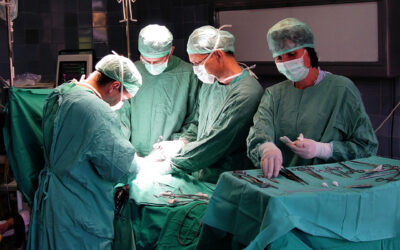
Groah offers a brief history of the role of perioperative nursing: “The use of a surgical assistant first appears in the literature in the late 1800s,” she says. “At that time, the role was in the areas of surgical instruments, preparation for operations, bandaging and hemostasis.”
“In 1891, student nurses were given responsibility for cleaning and sterilizing instruments and they were assigned to assist in surgery,” says Groah. “Advancements in anesthesia and technology soon made it possible to extend surgeries and reduce surgical mortality rates. This is when the role of the surgical nurse was expanded to be in charge of the operating room suite.”
According to Groah, AORN adopted a resolution in the 1970s regarding the necessity for a registered nurse in the operating room. “With the adoption of this resolution, AORN accepted the role of consumer advocate and determined how the function of the registered nurse justified their presence in this critical nursing area,” she says.
“At this point, the operating room, an area of high technology, became identified as an area requiring high patient touch by operating room nurses,” says Groah.
In 1978, AORN expanded the role of the OR nurse to include the integration of both the technical and professional functions of the perioperative role. “This included all three phases of the surgical experience: preoperative, intraoperative and postoperative,” says Groah.
Applegeet concurs.
“In the early days OR nurses were only seen as working within the confines of the OR,” she says. “They did not venture out into the pre- or post-op areas, and certainly not onto the floors.”
Major Advancements in Perioperative Nursing
Perioperative nursing has changed in countless ways over the past century. Ulmer believes that the 3 A’s – Anesthesia, Antibiotics and Antisepsis – are among the most important advances during this time.
“The advent of Lister’s antiseptic surgery laid the groundwork for the advancement of perioperative nursing,” says Ulmer. “Nurses played an integral role in the improvements in aseptic practices. I also believe that nurses played more than a passive role in the use of gloves in the operating room.”
For Allen, changes in surgical attire and personal protective wear are advancements that stand out. “When I started in the OR, we handled everything with our bare hands, and we washed our hands a million times a day,” she says. “There were no unsterile gloves or protective eyewear.”
Of course, there have been huge technology advancements. “This includes everything from computers, lasers, laparoscopic, minimally invasive and robotics, along with new procedures such as transplants, advances in heart and brain surgeries, total joint replacements, and endoscopes that give practitioners an inside look at the human body,” says Allen.
Or as Applegeet puts it: “We no longer cut cottonwoods, surgeons no longer have their own sets of instruments and we no longer sterilize suture.”
Allen notes innovations that help with moving and positioning patients safely. “These creative products and tools help make activities less physically taxing for the practitioner and provide positive outcomes for patients,” she says.
Surgical instruments have also been refined and made more user-friendly. “I can remember some surgeons having our maintenance department make specially crafted instruments for specific purposes,” says Allen. “We now have disposable clips for vessels, organs, skin and so many other disposables that were not available at the beginning of my perioperative practice.”
Applegeet notes changes in the personnel who are present in the OR during surgical procedures. “This includes surgical technicians, anesthesia technicians and industry reps, all of whom have changed the OR environment significantly,” she says.
Major AORN Achievements and Accomplishments
According to Groah, AORN now has more than 200 chapters that facilitate networking and collaboration among perioperative professionals. “In addition, the annual AORN Global Surgical Conference & Expo is the largest gathering of perioperative professionals worldwide and host to the largest trade show,” she says.
AORN also produces several valuable publications, including a peer-reviewed journal, The AORN Journal, and Outpatient Surgery Magazine.
“AORN emphasizes professional education and training for perioperative nurses,” says Groah.
Ulmer believes that the establishment of best practices across diverse settings is one of AORN’s biggest accomplishments. Shen notes that the first standards of practice were published in The AORN Journal in 1965 and were three pages in length.
“By 1978, the standards were published in a binder format and were 23 pages long,” says Ulmer. “The current evidenced-based Guidelines for Perioperative Practice are over 1,000 pages in length and cover every aspect of perioperative practice.”
“Guidelines for Perioperative Practice is the gold-standard in evidence-based recommendations to deliver safe perioperative patient care and achieve workplace safety,” says Allen.
Ulmer notes two specific areas where the efforts of AORN have made a huge difference in perioperative practice: the surgical Time Out and passage of surgical smoke legislation to protect patients and perioperative personnel.
“AORN members have been literally fighting for protection from surgical smoke for decades,” says Ulmer. “The landscape changed when nurses in California approached legislators and convinced them that we needed legal protection from practicing in settings where surgical smoke was not evacuated and filtered. Seventeen states have passed surgical smoke legislation so far with more on the horizon.”
Allen lists a number of other major AORN accomplishments:
• Providing educational videos with Davis+Geck company to assist members in the basics of perioperative practice.
• Development of the Perioperative Nursing Data Set (PNDS), the only standardized perioperative nursing language to help ensure that nurses are all speaking the same “language.”
• Innovative educational programs such as Periop 101 – A Core Curriculum to provide basic and continuing education for perioperative practitioners.
• Collaboration with nursing organizations in national initiatives such as the “Call to the Nursing Profession” and the “Nursing Agenda for the Future.”
• Collaboration with other practitioners in the perioperative arena on programs such as the OR Executive Summit and the Patient Safety Council.
“AORN has also advocated for nurses practicing in multiple perioperative settings and roles, such as first assistants, advanced practice nurses and ambulatory surgery,” says Applegeet. “In addition, AORN initiated the first certification exams for perioperative nurses to assist in demonstrating competence in their roles.”
The Importance of Grit
Ulmer believes that grit has been a key to these and other advancements in the perioperative field over the past century.
“Gritty people put in sustained effort over time to achieve a high level of success,” she says. “Grit is the backbone of how AORN was founded and why we as perioperative nurses have been successful in improving patient outcomes.”
The History of AORN: A Timeline
The Association of periOperative Registered Nurses (AORN) was founded in 1949 to establish a national community for operating room nurses who sought to share best practices for patients undergoing surgery. AORN’s mission today is to define, support and advocate for patient and staff safety through exemplary practice in all phases of perioperative nursing care.
Here are some of the significant events along the perioperative timely during the 75 years since AORN’s founding:
1949
AORN is founded by 17 OR supervisors from the metropolitan New York City area who voted unanimously to form a new association for operating room nurses.
1954
The first AORN National Conference is held in New York City with 1,700 nurses and 300 guests in attendance.
1960
OR Nursing magazine debuts as the education and standards publication for surgical nurses.
1963
The AORN Journal replaces OR Nursing and becomes the source for peer-reviewed articles and studies focused on perioperative practice.
1965
The first Standards for Administrative and Clinical Practice in the Operating Room is published by the AORN Journal. It is three pages long.
1968
The Davis+Geck and AORN movie on preoperative visits is filmed at Swedish Medical Center in Englewood, Colorado.
1973
AORN begins advocating nationally for the RN Circulator role, reinforcing that the OR nurse is the primary patient advocate in the perioperative setting.
1975-1976
AORN and ANA publish the Standards of Nursing Practice – Operating Room
1979
AORN declares the first National OR Nurse Day, committed to public awareness of the importance of perioperative registered nurses.
1983
AORN officially confirms the Registered Nurse First Assistant (RNFA) as an expanded role within the scope of practice of the registered nurse.
1991
Members vote to establish the AORN Foundation, a 501(c)3 nonprofit organization established to provide scholarships for members, promote perioperative research and offer funding for members to attend educational events.
1996
AORN creates its first website, AORN Online.
1999
AORN develops its landmark evidence-based program, Periop 101 – A Core Curriculum.
2004
AORN launches the first Time Out Day to publicly demonstrate commitment to this critical patient safety step.
2008
AORN introduces a Comprehensive Surgical Checklist.
2010
AORN partners with AACN and Vital Smarts in a follow-up to the 2005 study, “Silent Treatment,” with a new study, “Silence Kills.”
2016
AORN launches the GoClear Award program to shine a light on the hazards of surgical smoke to OR teams.
2020-2022
AORN is a national thought leader during the COVID-19 pandemic and publishes the COVID-19 Playbook.