Royal Philips and the World Stroke Organization (WSO) have published a policy paper calling for a revolution in stroke care to make a real difference to the lives of millions and bring significant economic benefits worldwide.
A stroke is typically an acute event, mostly caused by a blockage in a blood vessel in the brain that prevents adequate blood supply to brain tissue and leads to the permanent loss of brain cells. It is a leading cause of disability and death worldwide, affecting an estimated 12 million people globally every year, including an increasing number of young people. The direct and indirect costs are conservatively estimated to be around $900 billion annually and are expected to almost double over the next 25 years.

Thanks to new technologies, procedures and clinical insights, stroke may be prevented, treated and even reversed if treatment is initiated rapidly. However, despite a strong evidence base, there is insufficient focus on health care expenditure and research funding to advance stroke care. As a result, access to timely treatment remains limited and huge disparities in stroke care persist.
The joint WSO-Philips policy paper, which is accompanied by an editorial in The Lancet Neurology and aligned with recent World Health Organization (WHO) guidance, proposes six policy interventions to improve outcomes, and reduce direct costs with substantial potential savings, releasing essential resources for other priorities across struggling healthcare systems:
- Set targets and quality indicators, assess current gaps and prioritize stroke care in global, national and regional health plans.
- Expand and invest in infrastructures for essential stroke services, including stroke units and intravenous thrombolysis.
- Expand and invest in (capital) infrastructures for advanced stroke services: mechanical thrombectomy.
- Increase the necessary skills in the health workforce.
- Make sure that payment models provide adequate reimbursement of essential and advanced stroke care.
- Develop a strategy to realize the potential savings from essential and advanced acute stroke care.
The joint WSO-Philips policy paper “Time for a revolution in stroke care” can be downloaded here.
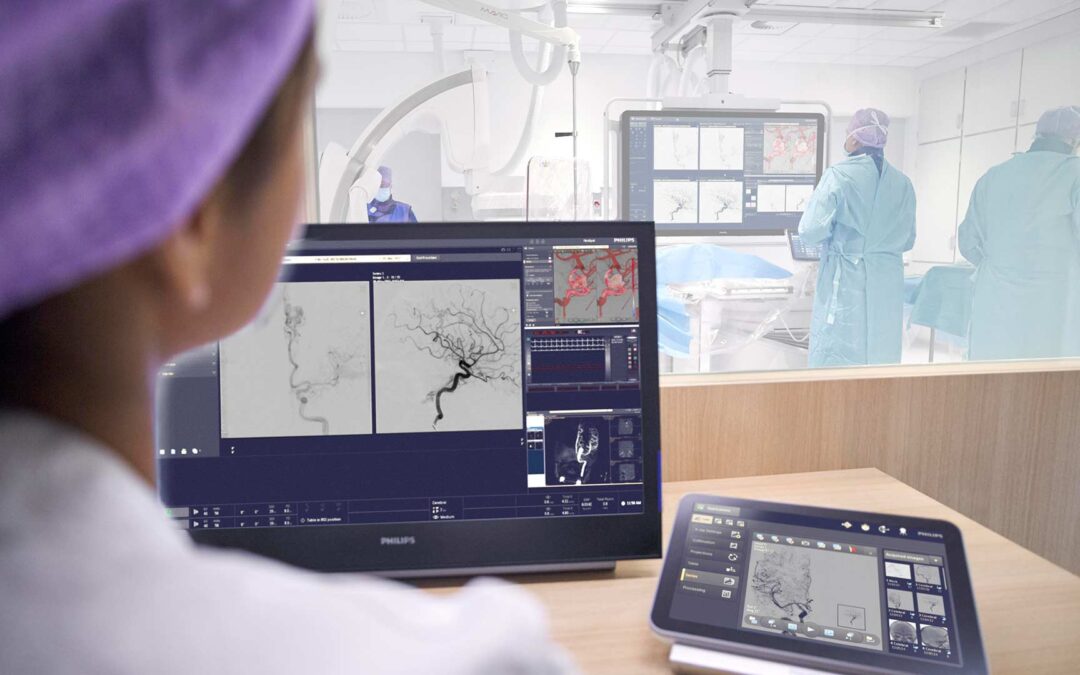
“Time is brain” is the mantra in stroke care, because every minute saved when treating a major stroke results in millions of saved brain cells. Investing in stroke centers and WHO recommended treatments including mechanical thrombectomy, a minimally invasive technique for removing the blood clot from the brain artery that caused the stroke, has the potential to improve hundreds of thousands of lives. Clinical trials show that mechanical thrombectomy is a highly effective treatment for the most debilitating strokes, and if treated in time, the impact is such that major strokes have become ‘curable’.
Yet, access to thrombectomy remains the exception rather than the norm in global stroke care. For example, an average of around 7% of all ischemic stroke patients in the European region received this treatment in 2019. Policymakers have a crucial opportunity to accelerate the rollout of this essential, advanced stroke care alongside the necessary associated infrastructure and policy to support.
Philips and the WSO signed a two-year partnership in October 2023 focused on advocacy, education and raising awareness of stroke as a global health care challenge. In May of this year, Philips supported the WSO side-event at the 77th World Health Assembly (WHA) entitled United in Action to Transform Stroke Care, which was the first ever WHA satellite session dedicated specifically to stroke.