By Grace O
As fall settles in, we crave recipes that warm us from the inside out. It’s the perfect time to add seasonal fruits, vegetables and soups to our cooking lineup.
Many of the vegetables I’ve highlighted are available year-round, thanks to partnerships with growers in Mexico and the Southern Hemisphere. But during fall, local harvests are at their peak, making it the ideal moment to explore vibrant, healthful additions to your fall recipe repertoire.
FoodTrients is a wellness philosophy and resource focused on using nutrient-rich foods to combat aging and support longevity. Each recipe blends the latest scientific research with medicinal herbs and ingredients from diverse global traditions, creating dishes that are packed with flavor and superfoods. These recipes are designed to boost wellness, enhance energy and vitality, improve skin health, and help people look and feel younger.

Here are some of my favorite fall vegetables that make healthy eating as delicious as it is nourishing:
ARTICHOKES
Artichokes enjoy a second crop in the fall (the first is in the spring). Fall produces small to medium artichokes, so everyone can have their own. Artichokes are packed with vitamins, minerals and antioxidants; they are also a source of probiotics, which support gut health by feeding the good bacteria that live there. The classic way to enjoy artichokes is steamed, and then dip the leaves and heart in melted butter. But for a healthier alternative, make the ‘dip’ from extra virgin olive oil, balsamic vinegar, a drop of Dijon or spicy mustard, and a dash of salt. See my recipe for Herbed Spinach-Artichoke Dip below.
DELICATA SQUASH
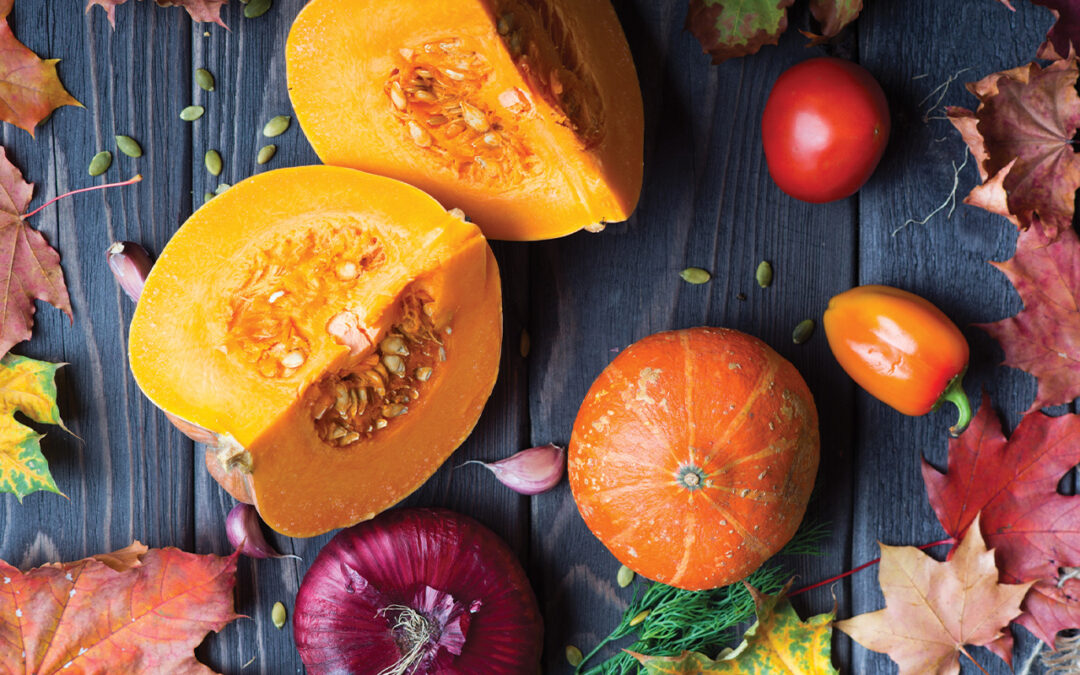
About five-to-seven inches long and one-and-a-half to three inches in diameter, Delicata squash have a scalloped shape and beautiful green and orange stripes. The deep yellow to orange flesh tastes somewhere between a sweet potato and butternut squash. When roasted or steamed, even the skin is edible. To bring out their natural sweetness, cut into rings or chunks (discard the seeds or clean and roast those separately to munch on later like pumpkin seeds), toss with olive oil, a little salt, and roast for about 20-25 minutes at 400 degrees F. Delicata are also delicious stuffed with breadcrumbs, chestnuts, and herbs or cut into small chunks to be added to rice or cous-cous. Nutritionally they’re a good source of potassium, iron, and vitamins A and C.
HONEYNUT SQUASH
Honeynut squash has dark tan to orange skin and orange fleshy pulp. It has two-to-three times more beta-carotene than butternut squash. Honeynut squash can be roasted, sautéed, puréed, added to soups, stews, and braises, and is even sweet enough for desserts.
LEEKS
Leeks are in the allium family, so they’re related to garlic, chives, shallots and onions. They have a sweet, oniony flavor that adds depth to soups, stews and pasta dishes. Grilled or roasted, they make a delicious side dish. They’re at their best in the fall and spring. Nutritionally, leeks are rich in flavonoids. Flavonoids are antioxidants and studies suggest that they provide anti-inflammatory, anti-diabetic, and anticancer properties.
PERSIMMONS
First grown in Greece and eventually China, persimmons come into season in fall through winter. There are two main types of persimmons, the round, tomato-shaped Fuyu and the more elongated Hachiya. The Fuyu can be eaten when firm and have a sweet, honey-like taste, while the Hachiya are not edible until they are soft to the touch, when they exchange their astringent flavor for a sweet one. Both varieties are high in vitamin A, fiber and some vitamin C. They’re great in baked goods, puddings and salads.
Grace O is the creator of FoodTrients, a unique program for optimizing wellness and longevity. She is the author of three award-winning cookbooks. Her latest cookbook is Anti-Aging Dishes from Around the World. You can find more age-defying recipes at Foodtrients.com/recipes. Recipes and photos reprinted with permission of FoodTrients.com and Anti-Aging Dishes from Around the World by Grace O.