By James X. Stobinski, Ph.D., RN, CNOR(E), CSSM(E), CNAMB(E)
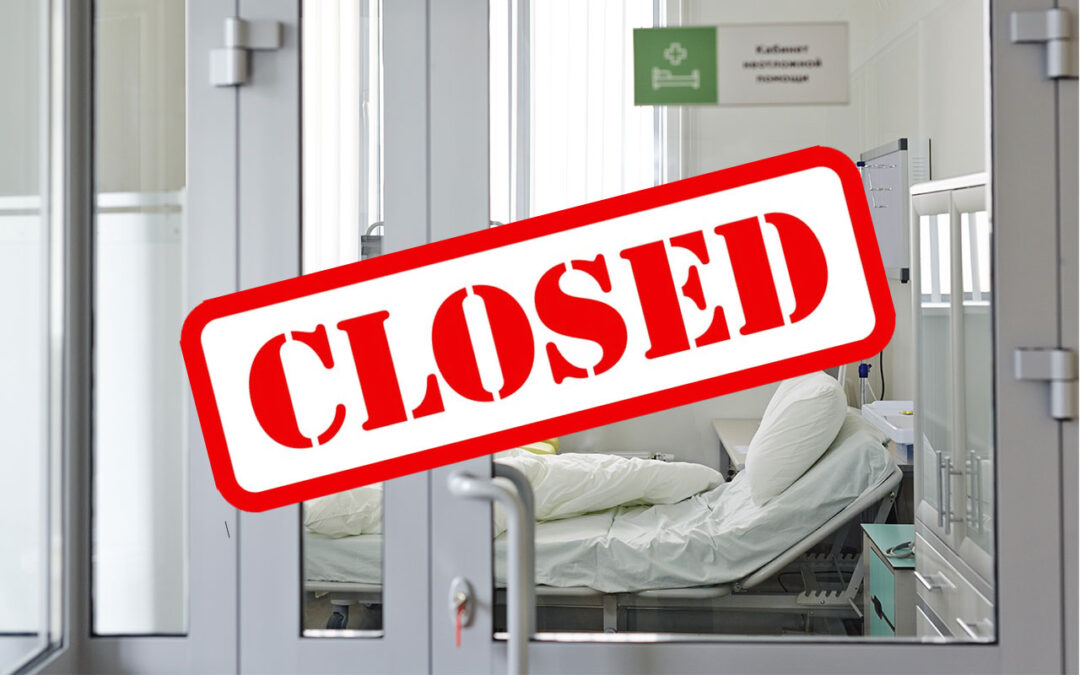
Recently, a rural hospital closure in Michigan made national headlines in a trade publication. For this Michigan resident this announcement literally, hit close to home. Sturgis Hospital, in the very Southwest corner of the lower peninsula in the state, closed its doors on June 19. The facility, in operation since 1925, “… became one of the first hospitals in the nation — and the first in Michigan — to convert to a Rural Emergency Hospital in 2023.”(1) This Michigan hospital is the latest rural facility to either discontinue inpatient services or close. Changes in reimbursement and eligibility requirements may soon precipitate additional closures in rural sites.

The Rural Emergency Hospital program was developed by CMS in response to continuing rural hospital closures and attempts to increase access to healthcare for rural communities. Conversions to REH status began on January 1, 2023, and as February of 2026, 44 hospitals in 18 states had converted to that status.(2) A Rural Emergency Hospital must provide 24/7 emergency department services, observation care and has the option to provide other outpatient medical and health services.(2) An REH cannot provide acute inpatient hospital services except for a separately licensed skilled nursing facility unit.
To continue healthcare services to rural areas healthcare facilities such as Critical Access Hospitals (CAH) and rural hospitals with 50 or fewer beds that meet eligibility requirements may convert to REH status.(2) To assist these facilities CMS Medicare will pay for outpatient and emergency services, offers enhanced payment rate for certain services and makes an additional monthly facility payment to support operations. The Rural Emergency Hospital program allows eligible rural hospitals to stop providing inpatient care while continuing to offer emergency and outpatient services, with additional Medicare support designed to keep healthcare available in rural communities.
There are 6,093 healthcare facilities designated as hospitals in this country. Included in that number are 1,377 CAHs and a 44 REHs. A Critical Access Hospital (CAH) is a small rural hospital with inpatient capability, while an REH is an emergency-and-outpatient-focused facility designed to keep healthcare access available in rural communities when inpatient care is no longer viable. Essentially, we have a two-tiered system in American healthcare with rural residents increasingly dependent on CAH and REH facilities with limited services and capacity.
Decreases in Medicaid funding which will take place after the mid-term elections this year will negatively impact the rural hospitals with high Medicaid patient enrollments.(3) In addition, changes to the 340B medication program will also have an adverse impact on rural facilities. The 340B program, “…requires pharmaceutical manufacturers participating in Medicaid to sell outpatient drugs at discounted prices to healthcare organizations that care for many uninsured and low-income patients.”(4) This program is an economic lifeline for many rural facilities. The combination of these two forces may drive more facilities to convert to CAH or REH status or cease operations entirely.
The impact to surgical care capacity is clear as access declines and services are cut at rural facilities. Patients will be forced to travel greater distances for surgery and there will be decreased employment opportunities for those working in surgery. From a nursing education perspective this ultimately means fewer clinical sites and less opportunity for rural residents to become familiar with healthcare professions. For decades community hospitals such as the Sturgis facility had diploma of nursing programs. These programs are very limited now and rural residents have far less educational choices. The closure of one small facility in Michigan may be the first of many as American healthcare continues to evolve but the community impact looms far beyond longer travel times.

James X. Stobinski, Ph.D., RN, CNOR, CSSM(E), CNAMB(E), is a faculty member at Central Michigan University and is the director of hospital and ASC surgical education relationships with National Institute of First Assisting (NIFA).
References
- Condon, A. (May 16, 2026). After 101 years, Michigan hospital to close. Becker’s Hospital Review. https://www.beckershospitalreview.com/finance/after-101-years-michigan-hospital-to-close/?origin=CFOE&utm_source=CFOE&utm_medium=email&utm_content=newsletter&oly_enc_id=0705J2387567B1E
- Rural Emergency Hospitals | CMS. (n.d.). https://www.cms.gov/medicare/health-safety-standards/certification-compliance/rural-emergency-hospitals
- Jia,Y., Li, Y., Cai, X., & Enumah, S.J. (2026). Payer mix shifts and profitability at critical access hospitals, 2011 to 2023, Health Affairs Scholar, (4)4, https://doi.org/10.1093/haschl/qxag083
- American Hospital Association. (2025). Fact Sheet: The 340B drug pricing program (pp. 1–3) [Report]. https://www.aha.org/system/files/media/file/2019/03/fact-sheet-340b-drug-pricinig-program-0119.pdf