By Don Sadler
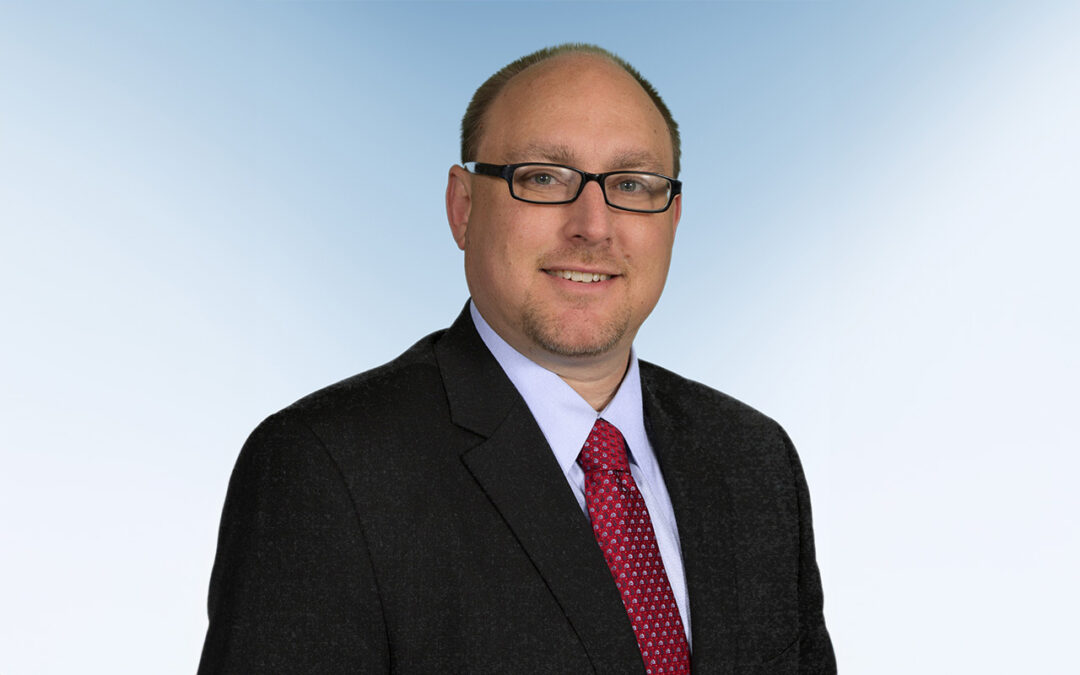
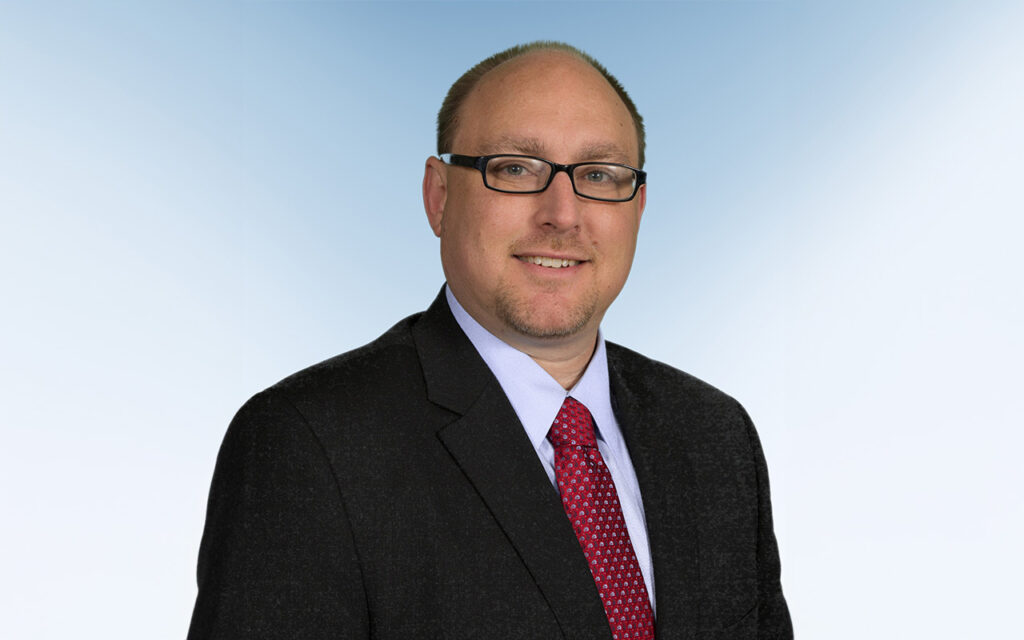
Travis Tingle’s journey into perioperative nursing was inspired by his grandfather, who was a medic in World War II. “My grandfather was very influential in my upbringing,” Travis says. “I heard lots of stories growing up about his experience as a World War II medic so I knew I wanted a career in medicine.”
Travis obtained a Diploma of Nursing from Methodist School of Nursing in Lubbock, Texas, in 1998 before receiving his BSN from Texas Tech two years later. Then, he worked in med-surg for two years after graduating.
“A couple of friends from school who got jobs in the OR told me about an opening and I figured I’d give it a try,” says Travis. “And I’ve never looked back.”

In 2004, Travis’ perioperative career turned in a different direction when he went to work as a sales and service representative for Mobile Instrument Service & Repair in Cedar Park, Texas. In this role, he provided onsite surgical instrument evaluation and repair of complex surgical equipment. “I was primarily focused on sterile processing instruments,” he says.
This job paved the way for Travis’ current role as the director of perioperative services for Houston Methodist Hospital. There, Travis oversees multiple surgical service lines – including plastic surgery, ENT, ophthalmology and oral maxillofacial – while managing more than 100 staff members. The role includes oversight of pre-op, post-op, PACU, budgets and staffing.
“My area includes 21 operating rooms, 30 pre-op and discharge rooms and 25 PACU spaces,” he says.
The most rewarding aspect of Travis’ perioperative career has been the many relationships he’s developed over the years. “I’ve had the chance to work with some really interesting and intelligent people, including some very innovative surgeons,” he says. “I always tell my kids that building strong relationships is one of the keys to success so to always make sure you treat people well.”
Early in his career, Travis was part of a neurosurgery team doing deep brain stimulation. “The patient was a guitar player who had a tremor that kept him from playing because his hands shook so bad,” he says. “It was a wake surgery, which was innovative at the time. We had him hold onto a cup of coffee and then placed the lead in his brain, and he stopped shaking and held the cup steady.”
The patient later came back and played guitar for the surgical team. “That experience was a game-changer for me,” Travis says. “It really solidified that perioperative nursing was what I wanted to do.”

Given his background in surgical instruments and equipment, Travis believes that rapid technological advances are having a tremendous impact on perioperative nursing. “We’re seeing a lot of technological change happen very quickly, especially as it relates to artificial intelligence in the OR,” he says.
Houston Methodist is using AI platforms in its ORs, ICUs and patient rooms.
“AI is helping us take better care of our patients,” Travis says. “We’re also seeing improvements in efficiency and processes by using AI tools to hone in on things we can do better that have a positive effect on patient care. Any new technology we use has to have a patient focus.”
Specifically, Houston Methodist has placed cameras in the ORs that identify people and time events during cases – a process Travis calls ambient intelligence. “This helps us laser in on certain aspects of cases and use these metrics for process improvement,” he says. “It also allows us to automate mundane tasks like documenting and time stamping, which gives us more time to spend with patients.”
Travis believes that perioperative professionals need to be flexible and adaptable to the changes that are occurring because of new technology.
“It’s not going away,” he says. “If anything, technological change is getting ramped up faster than we can keep up with. Nursing schools need to stress to students that the profession isn’t what they saw on TV in the ’90s.”
As a perioperative services director, Travis focuses mainly on being a strong leader. “Throughout my career I’ve worked with some really great leaders and some who were pretty bad, so I try to incorporate the positive aspects of leadership I’ve experienced into my style,” he says. “The perioperative environment can be very stressful, so I try to keep employees smiling and focused on the needs of the patients we’re caring for.”
Travis calls himself a “fix-it” guy. “I like to tinker,” he says. “If something breaks, I’m going to try to fix it first before I buy a new one. It might be a 50-50 shot, but it’s worth a try.”
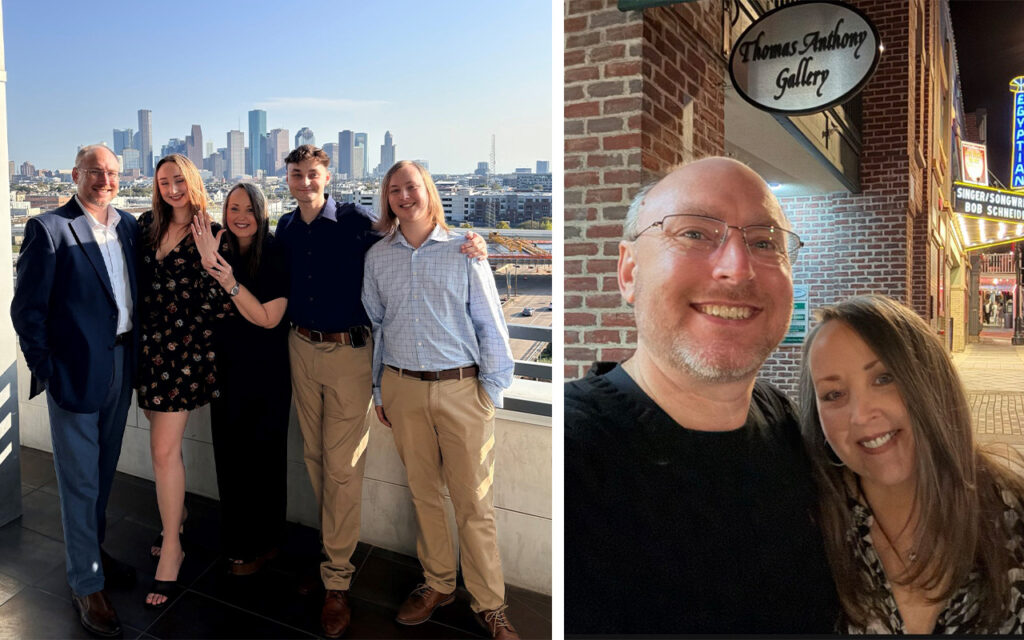
He also enjoys the outdoors, whether it’s hunting, hiking with his wife, Kelly, and three grown children Ashtyn, Griffin and Jaxson, or playing golf.
“I married my high school sweetheart and we’ve been together for 34 years,” Travis says. “My family is the pride of my life for sure.”
Professional Spotlight Nomination
"*" indicates required fields