The operating room is one of the most dynamic and challenging work environments imaginable. As a result, most experienced perioperative nurses are used to dealing with unpredictability and change, as well as assuming new responsibilities and wearing lots of different hats.
This is even more pronounced at a critical access hospital. These were established in 1997 to provide service in rural areas where patients might otherwise have to drive long distances to receive emergency care.

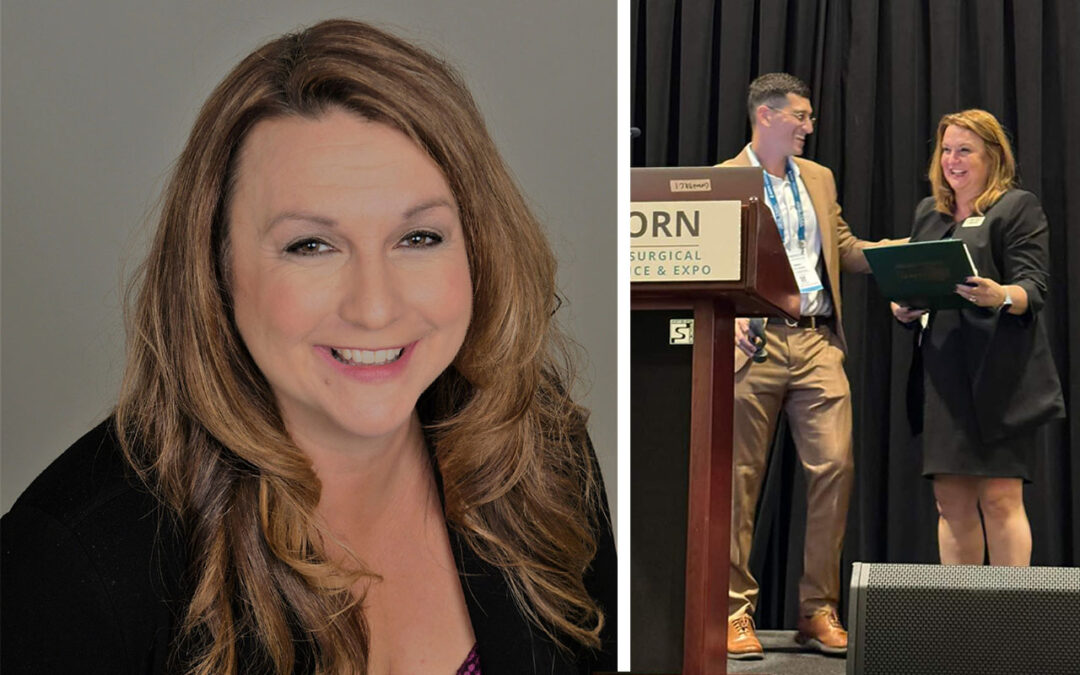
Elaine Geroski is the assistant vice president of patient services and chief nursing officer at West Virginia University Medicine Grant Memorial Hospital, a critical access hospital in Petersburg, W.V.
“At a critical access hospital, you’re not limited to just one role,” Elaine says. “You have to wear multiple hats because the role requires extensive collaboration across all the units. This is one of the things that I find so rewarding about my job.”
Elaine has been a perioperative nurse for the past two decades, working in a wide variety of different hospital environments. Her roles have included operating room and PACU RN, director of surgical services, senior director of perioperative services, operating room nurse educator, clinical manager, vice president of nursing, and director of workforce development.
Perioperative nursing was hard to break into 20 years ago because new nurses weren’t hired directly into the OR.
“You had to work as a floor nurse first,” she says. “I was working in a unit at a hospital that was being closed and they told us we could apply for any position except the OR. Well, I applied for the OR anyway – and I was accepted! I had a wonderful mentor who was willing to give me a chance, and I soon discovered that perioperative nursing was what I loved.”
Elaine believes that perioperative nursing requires more advanced technology skills and the ability to solve problems quickly. “Sometimes you only have a split second to deal with issues that come up,” she says. “And you have to fix equipment on the fly because everybody else usually is scrubbed in and can’t scrub out.”
Perhaps the biggest thing that sets perioperative nursing apart is the fact that OR nurses are responsible for speaking up for patients who are under anesthesia and unable to speak for themselves.
“This is a special gift because OR patients will never know what you did to protect them,” Elaine says. “I think this is very rewarding, but if you want to hear accolades from patients, then perioperative nursing probably isn’t for you.”
Elaine encourages other perioperative nurses to speak up for patient safety.
“Don’t be afraid to ask questions if something doesn’t look quite right,” she says. “The power of the perioperative nurse can change a patient’s outcome.”
One of the biggest changes Elaine has seen over the past two decades in the OR is the respect that is shown to all members of the perioperative team.
“Disrespect and bad behavior simply aren’t tolerated in the OR anymore,” she says. “I once had a scope thrown at my head early in my career at a different organization, but things have changed since then. I don’t see this kind of thing happening anymore. Every surgeon I work with is civil and teamwork-oriented.”
When Elaine became a director of perioperative services, she says she noticed that some standards “weren’t being followed to a T. By properly implementing these standards, we saw a 75% reduction in surgical site infections. I wanted to do more so I got my CSSM certification, which enabled me to volunteer to be a part of the Competency & Credentialing Institute (CCI). In addition to my CNOR certification, I became one of the first 100 people credentialed to be a certified surgical services manager.”
Elaine applied for a position on the CCI board of directors and was elected in 2018. Then she was elected president of the CCI board in 2021, serving in this role for three years – the longest tenure of any CCI board president.
“Volunteering on the CCI board has been invaluable to my perioperative career,” she says. “I’ve learned so much about certifications and credentialing bodies. But the most valuable part has been the collaboration with other entities.”
During her last year as president, the CCI board focused on working closely with the Association of periOperative Registered Nurses (AORN) to make sure they were one unified voice.
“In the past, I didn’t think we were representing ourselves as a united front,” she says. “But that has changed now, and I’m very proud of this.” Elaine says her time on the CCI board, including her three years as president, represents some of the most rewarding work of her career.
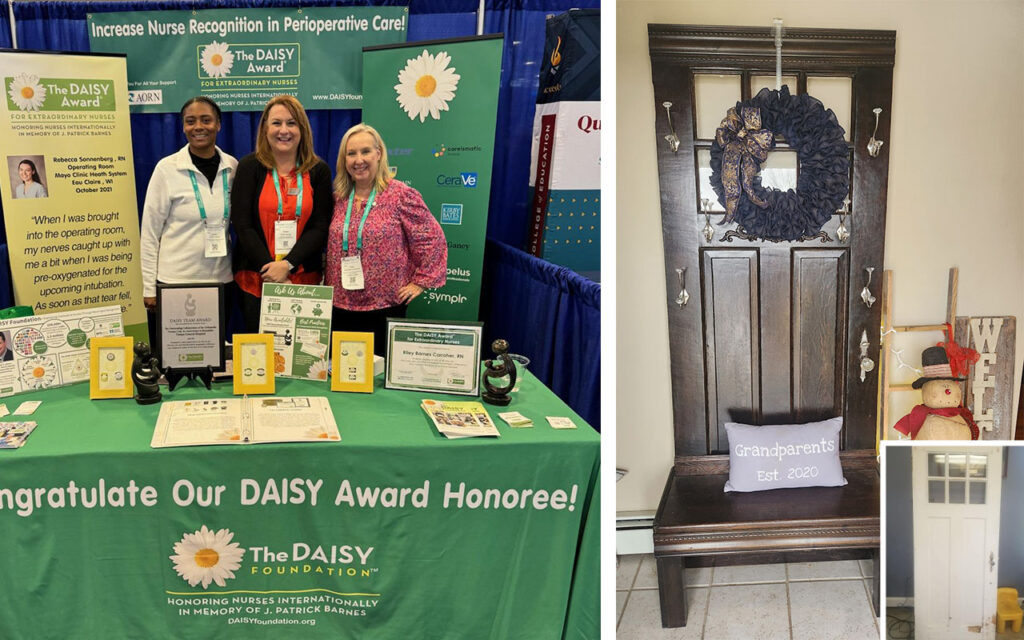
In recognition of all the accomplishments in her perioperative career, Elaine received the DAISY Nurse Leader Award in 2024. The DAISY Foundation was established in 1999 by Tena Barnes Carraher after her husband Patrick Barnes died from complications of the auto immune disease ITP. Tena and her family wanted to recognize the tremendous care and compassion Patrick’s nurses brought to him and their family during his illness.
Elaine is proud of her hospital’s five-star CMS rating for patient safety, nurse responsiveness and overall quality. In addition, WVU Medicine Grant Memorial Hospital was ranked #27 in the country by Money.com for delivering safe, high-quality patient care and patient experiences.
“I think this speaks volumes about every nurse, technician and provider in our facility,” she says.
To relax and unwind outside of work, Elaine refurnishes antique furniture.
“This is a real stress-reliever for me,” she says. “I’m constantly looking for pieces for my next project, which tends to clutter up my basement.”
Rather than sell refinished pieces, Elaine keeps them in her home. “It’s hard to let go of pieces after I’ve put so much time and effort into refinishing them,” she says.
Professional Spotlight Nomination
"*" indicates required fields