
By Don Sadler
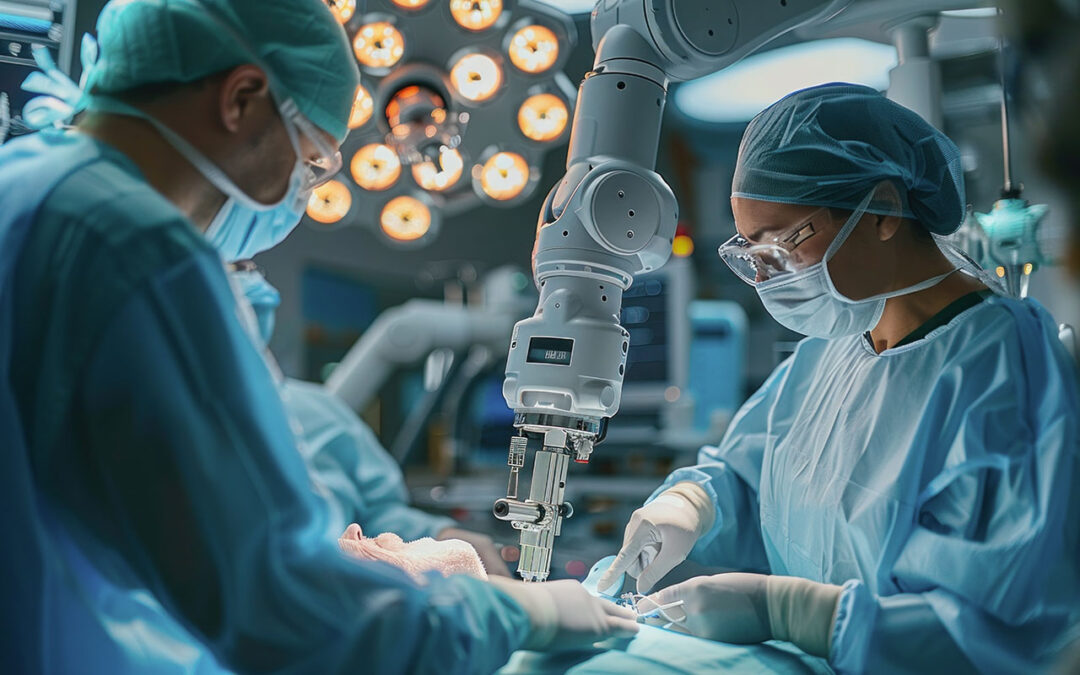
Robotic-assisted surgery is reshaping the operating room, and it’s arriving alongside two other advances that are transforming surgical care: hybrid operating rooms and advanced imaging. Each of these offers tremendous potential benefits to patients, hospitals and ambulatory surgery centers (ASCs).
The Rise of Robotic-Assisted Surgery
Robotics have revolutionized surgery in the relatively short period of time since Intuitive Surgical’s pioneering da Vinci Surgical System first gained FDA approval in 2000. Robotics are now used in a wide range of surgical procedures including spinal fusions, spinal decompressions, tumor resections, total hip and knee replacements, prostatectomies, hysterectomies, hernia repairs, cholecystectomies, colectomies, lower anterior resections and lung resections.

Year-over-year procedure volumes are increasing by double digits with more than 2.6 million robotic surgeries performed annually in the U.S. using the da Vinci system. The robotic surgery market is now expanding beyond the da Vinci system to include new players such as Medtronic (Hugo Robotic-Assisted Surgery System), Johnson & Johnson (OTTAVA Robotic Surgical System) and CMR Surgical (Versius Surgical System).
“Each of these companies offers platforms designed to address a range of surgical specialties, from general and urologic surgery to orthopedics and thoracics,” says Brandie Kent, MSN, RN, CNOR, system robotics & center of excellence manager at Northeast Georgia Medical Center.
According to Kent, robotic-assisted surgery has transformed procedures that were once performed as open surgeries into highly precise, minimally invasive interventions. “This shift delivers measurable benefits for both our healthcare system and, most importantly, our patients,” she says.
Benefits for Patients and Hospitals
There are a number of reasons for the growing popularity of robotic surgery, but the main one is simple: It usually results in higher levels of patient satisfaction.
“For patients, robotic-assisted surgery is primarily about enabling minimally invasive procedures,” says Zach Swartz, MHI, BSN, RN, EBP-C, CNOR, perioperative practice specialist with the Association of periOperative Registered Nurses (AORN). “These often require smaller incisions with less blood loss in some procedures, shorter hospital stays and faster recovery times when used appropriately.”
“High-definition, 3D visualization and articulated instruments provide surgeons with greater precision, control and access even in complex or hard-to-reach anatomy,” adds Kent. “This level of accuracy supports more effective procedures and improved long-term outcomes, including reduced scarring and fewer complications.”
For hospitals, Swartz says the benefits are less about the robot itself and more about program impact: expanding minimally invasive offerings, improving access and aligning cases to the right care setting.
Another key benefit for hospitals is the ability to create more consistent and predictable surgical workflows from the procedure through recovery. “Standardized protocols streamline care, reduce room turnover times and minimize delays across the perioperative process,” says Kent. “These efficiencies support long-term program growth, enhance patient safety and help maintain a high standard of care.”
While the initial cost of starting a robotics program can put a strain on hospital systems, robotic-assisted surgery brings many benefits once it’s established, says Jennifer Holbrook, BS, ASN, RN, cardiovascular operating room clinical coordinator with Wellstar Kennestone Regional Medical Center. “These include shorter recovery times, better access during procedures and up-to-date software that eases some of the stress of the OR.”
Demand for Robotics in ASCs Is Growing
The use of robotics is growing in ASCs for select procedures where patients can safely recover the same day.
“The patient demand for robotics in ASCs continues to increase,” says Michael J. Patterson, FACHE, former Ambulatory Surgery Center Association (ASCA) board president and president & CEO of Mississippi Valley Health. “Generally speaking, robotics can cut down on tissue trauma and procedure time and lend itself to a faster recovery for ASC patients.”
Swartz says ASCs are using robotics to shift lower-acuity cases out of the hospital and expand access. “But this only works with intentional patient selection, standardized workflows and clear escalation pathways.”
To reap the biggest benefits from robotics, ASCs need to understand the economics of a robot. “They come with increased maintenance costs and disposable costs,” says Patterson. “Given that ASCs are generally paid about half of what a hospital is paid for the same procedure, they really have to understand how patients and providers are going to recognize improved outcomes, because they do come at a cost.”
According to Patterson, knee and hip replacements are the main robotic procedures being performed in ASCs. “Shoulders are just starting to come into play with robotics as well,” he says. “In addition, general surgeons, urologic surgeons and gynecology surgeons are starting to see some increased movement of patients wanting robotic surgery in concert with an ASC setting.”
Meanwhile, the use of robotics continues to evolve in orthopedic and spine surgery. “Robotic-assisted platforms in this space leverage CT-based planning software to give surgeons a more detailed understanding of a patient’s anatomy,” says Kent. “This enables the creation of a highly personalized surgical plan tailored to each patient’s unique anatomy and goals.”
Technology Trends in Robotics
A number of technology trends and developments are influencing the field of robotic surgery, including advanced imaging and AI-enabled analytics.
“AI has the potential to optimize surgical workflows and provide data-driven analytics that support continuous improvement,” says Kent. “Surgeons can leverage real-time data to refine techniques, improve efficiency and minimize tissue trauma.”
Another trend is a shift toward linking robotics with imaging and data systems instead of treating them as standalone tools. “Overall, the trend is less about adding technology and more about integrating imaging, instrumentation and workflow into a single procedural environment,” says Swartz.
Robotic bronchoscopy represents one area of notable growth. “Multiple platforms are now available to support minimally invasive lung biopsies for small, hard-to-reach nodules that have historically been difficult to access,” says Kent. “This capability may support earlier and more accurate diagnosis, which is an important factor in improving lung cancer outcomes.”
Holbrook calls cardiac robotic surgeries an “up and coming trend. “Although cardiac robotics have been around for about 20 years, they have started to grow in popularity in recent years,” she says.
Patterson stresses that the use of a robot in the OR is just one of many tools surgeons utilize to improve outcomes and decrease recovery time. “The surgeon is still the captain of the ship in the OR,” he says. “While the use of robotics has been an expected evolution in healthcare, we still need surgeons to operate them and recognize when the robot has reached its limitation.”
The Evolution of Hybrid ORs
The hybrid operating room is another emerging trend in surgery that’s worth paying attention to now and in the future. A hybrid OR is a state-of-the-art space that combines a traditional operating room with an image guided interventional suite. Equipped with both surgical equipment and instrumentation, along with dedicated advanced imaging modalities, hybrid ORs are designed to accommodate traditional surgical, minimally invasive and interventional procedures in the same space.
“Hybrid ORs are evolving into image-guided procedural environments rather than just rooms with more equipment,” says Swartz. “Advanced intraoperative imaging allows teams to assess results and adjust in real time, which changes how decisions are made during the case.”
Hybrid operating rooms give hospitals more flexibility with real-time decision support. “Hybrid ORs combine surgery with advanced imaging so teams can confirm results during the procedure, reducing the need for re-interventions,” says Swartz. “Intraoperative imaging allows immediate adjustment if something is off, which can improve safety and reduce the need for follow-up interventions.”
Kent believes that integrating trauma and acute care surgery into a robotic-enabled hybrid OR creates a meaningful opportunity to expand minimally invasive approaches within trauma care, especially for hemodynamically stable patients. “This model brings together advanced imaging, robotic precision and multidisciplinary collaboration in a single, highly coordinated environment,” she says.
According to Swartz, robotics fit best in hybrid ORs when imaging directly supports the procedure, such as spine, vascular or other image-dependent cases. “The hybrid environment allows teams to plan, confirm and adjust in real time using imaging alongside robotic instrumentation,” he says. “In practice, the combination is most valuable when intraoperative imaging changes decision-making, not just as an added layer of technology.”
Inside a Hybrid OR-Cath Lab
AdventHealth Kissimmee recently installed a new state-of-the-art hybrid OR and catheterization lab that brings together the advanced imaging capabilities of a traditional cardiac cath lab with the sterile, fully equipped environment of a surgical suite.
“This enables seamless transitions between minimally invasive procedures and open surgery without the need to move the patient or delay care,” says AdventHealth Kissimmee’s Director of Imaging and Cardiology Diego Sigala, HCMBA, BSN, BBA, RN.
The hospital installed the hybrid OR-cath lab in response to needs in the community, where many individuals face complex health challenges including vascular disease, diabetes and a high rate of amputations. The hybrid lab offers distinct advantages that directly translate to better patient outcomes.
“For example, if a minimally invasive peripheral procedure encounters a complication, there’s no need to rush the patient down a hallway to a traditional operating room,” says Sigala. “The hybrid lab instantly transforms into an open surgical suite. Every second saved increases the odds of a better outcome.”
Thanks to the cutting-edge imaging technology integrated into the room, specialists can perform highly complex, minimally invasive interventions. “For patients, this means less time under anesthesia, reduced radiation exposure, shorter hospital stays and a much faster return to the activities that matter most in their daily lives,” says Sigala.
Building a hybrid lab represents more than physical expansion – it reflects a meaningful clinical transformation. “It calls for seamless collaboration across disciplines, bringing together nursing, cardiology, radiology and surgical teams to function as one connected, patient-centered unit,” says Sigala.
“This level of integration ensures that care is not only advanced, but also thoughtful, efficient and responsive to each patient’s needs,” Sigala adds. “The most critical piece of the puzzle is care coordination and the culture pushing the latest technology.”
Imaging Upgrades Boost Efficiency and Patient Outcomes
AdventHealth Winter Garden recently implemented Deep Resolve within its MRI department to improve efficiency and patient throughput. Deep Resolve is an AI-enabled imaging solution that accelerates scan acquisition while maintaining high image quality.
“As a single-MRI campus supporting both inpatient and outpatient demand, we were experiencing prolonged inpatient stays due to delayed imaging access, as well as outpatient scheduling delays that could extend several weeks,” says AdventHealth Winter Garden’s Director of Operations, Imaging & Cardiology Samantha Leon. “The implementation of Deep Resolve has been transformational for our department’s operational performance.”
For example, the department averaged about 300 MRI scans per month prior to implementing Deep Resolve. Following implementation, volume increased to over 800 scans in May alone.
“This is 500 more patients who received timely access to advanced imaging,” says Leon.
There were also significant reductions in scan times across key exam types. For example, breast MRI exam durations decreased from about 29 minutes to 13 minutes. “This improvement not only enhances throughput, but it also meaningfully improves the patient experience, especially for patients undergoing longer or more sensitive exams,” says Leon.
Meanwhile, AdventHealth Celebration recently installed Insightec MRI-guided focused ultrasound technology within its MRI department. “We identified a clear need to provide patients with a highly precise, image-guided option for conditions like essential tremor,” says AdventHealth Celebration Director of Imaging Services Reynaldo Geo Cruz, MHA, RT(R).
This solution eliminates the need for traditional surgery while maintaining exceptional accuracy and safety through real-time MRI guidance. “For patients, the impact has been profound,” says Cruz. “It allows individuals suffering from essential tremor to receive transformative treatment close to home, without the risks or recovery associated with open procedures.”
“We’ve seen patients who were forced to leave their jobs due to the severity of their tremors regain function and return to work,” Cruz adds. “Others who struggled with basic daily activities such as holding a cup of coffee have experienced immediate improvement.”
According to Cruz, the successful implementation of MRI-guided focused ultrasound represents more than the addition of new technology.
“It is a strategic investment in delivering safer, more precise and less invasive care,” he says. “By leveraging MRI guidance, we’re able to target treatment with exceptional accuracy while continuously monitoring outcomes in real time. This reinforces both safety and effectiveness.”
Whether it’s a robotic platform, a hybrid OR that flexes from minimally invasive to open in seconds, or an AI-enabled scanner that doubles imaging throughput, the common thread is the same: technology that lets surgical teams work more precisely, decide in real time and get patients home faster. As Patterson notes, the surgeon remains the captain of the ship — but the tools at their command are advancing quickly.