By Grace O
It’s time to welcome the vibrant resurgence of spring with open arms and a palate primed for the season’s freshest offerings.
While today’s food markets may offer a semblance of year-round availability, there’s an undeniable allure to the locally sourced bounty that emerges in spring. As the chill of winter recedes, local markets teem with the vibrant colors and crisp flavors of spring produce, beckoning both seasoned chefs and culinary novices alike to explore new realms of taste and nutrition.
Let my FoodTrients list of spring vegetables be your trusted guide on the journey of culinary health and wellness. Here are a variety of sweet and delicious spring vegetables I recommend:

Asparagus
There was a time not long ago when fresh asparagus was a harbinger of spring and it had a very short season, from April to May. Now it’s available year-round (from Peru), but there’s something about local spears that deliver the promise of spring. You’ll find asparagus from pencil-width to thicker than your thumb. The thick spears are especially good roasted. The thin ones are great in salads and stir frys. Nutritionally, asparagus is low in calories and contains 18 percent of the RDI for vitamin A and 12 percent for vitamin C.
Fiddleheads
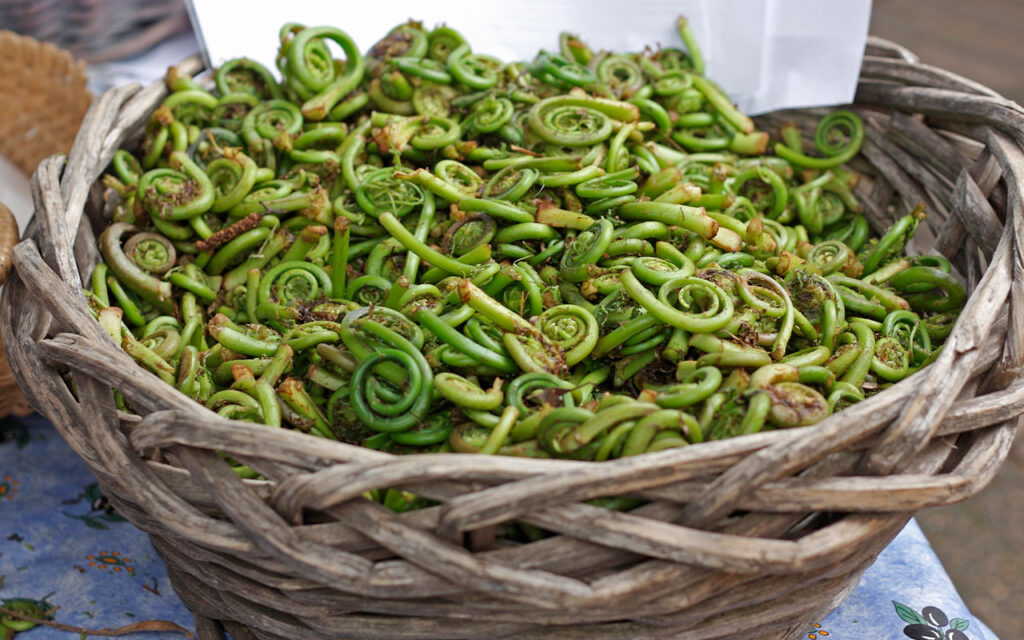 Fiddleheads are tightly curled young ostrich fern shoots. They are not grown commercially, but are foraged and have a short season, so they are considered a delicacy. They’re typically available only at specialty grocers and farmer’s markets, so when you see them, buy them. Fiddleheads must be carefully trimmed and boiled to remove their bitterness and bring out their delicate, delicious flavor. Because they have small traces of toxins when eaten raw, fiddleheads need to be cooked. They taste like a cross between asparagus and broccoli, while some people compare them to mushrooms.
Lettuce
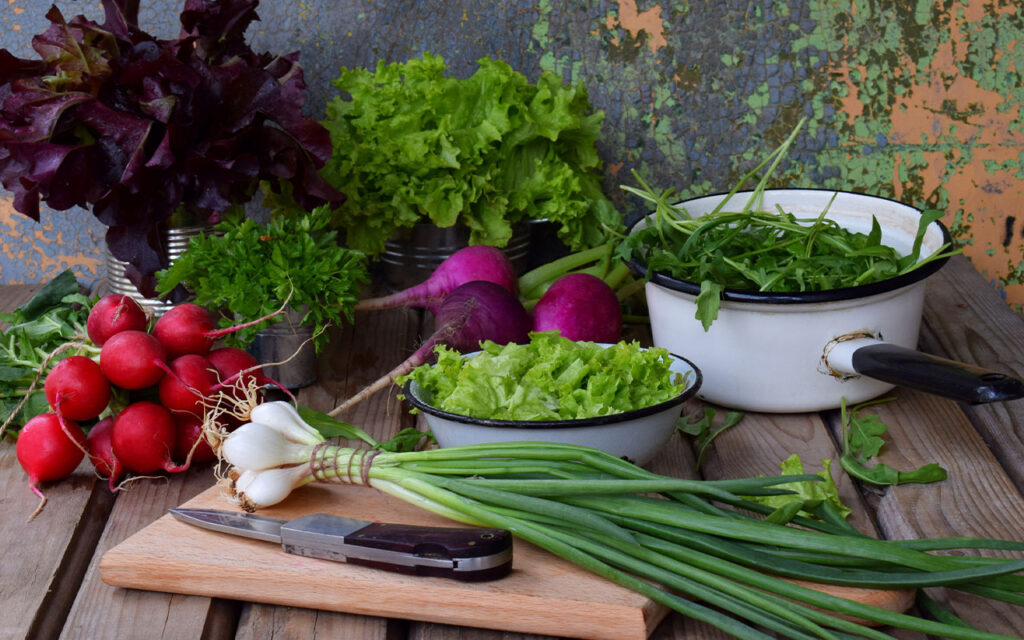
Every kind of lettuce imaginable is available year-round in supermarkets. But farmer’s markets have an even wider selection in spring when the greens are harvested locally. All kinds of lettuce are easy to grow in the ground or in pots and can be harvested a few leaves at a time for that night’s salad. All lettuce has practically no calories but adds color and crunch to salads.
Radishes
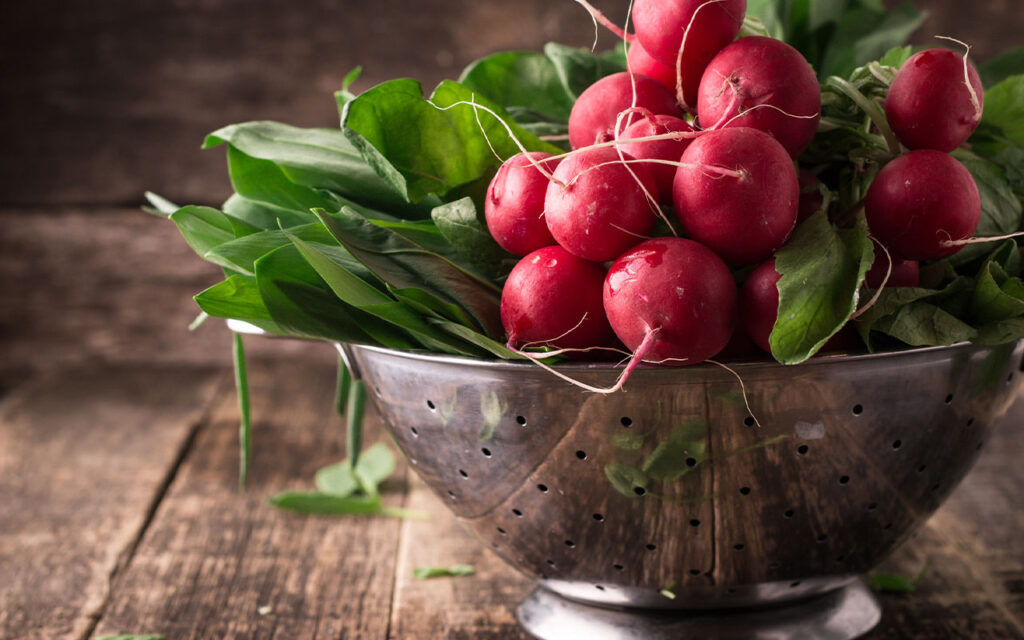 Pungent, crunchy, and perfect for snacking, radishes are usually eaten raw in salads and on relish trays. Try grilling or roasting them for a little different taste and texture. Radishes are especially delicious when purchased fresh from the farmer’s market, which often features heirloom or unusual varieties. They’re easy to grow yourself with some types ready to harvest in less than a month. The vegetable has few calories, is low in carbohydrates, and has a low glycemic index level, but it is rich in several vitamins and minerals.
Ramps
Ramps are delicate, wild leeks. They have an oniony-garlicky flavor that becomes milder when sautéed. Their season is brief, just a few weeks in the spring. You probably won’t find them in the produce section of your local supermarket, so grab them when you see them at farmer’s markets.
Rhubarb
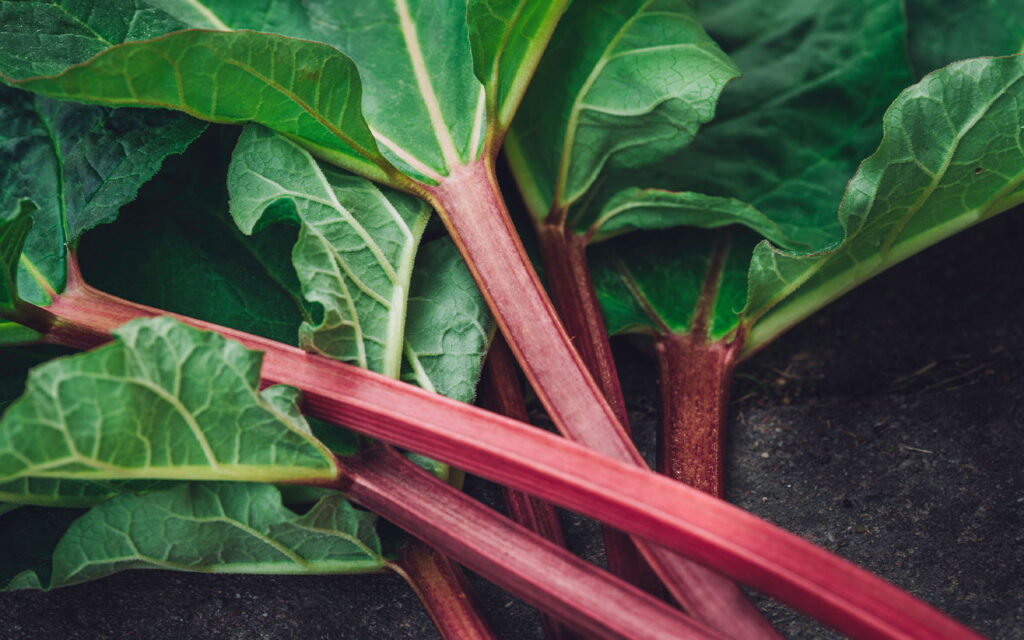 Looking like pinkish-red celery stalks, rhubarb has a tart flavor that works in both sweet and savory dishes. It’s available in the frozen section year-round, but it’s available fresh in the spring. It’s one of the few vegetables that’s a perennial, so if you try growing it at home, you can harvest rhubarb year after year from your garden if it has the right growing conditions. It has a small amount of vitamin C and a good amount of vitamin K, which is essential for blood clotting and building bones.
Sorrel
An herb with a tangy, lemony taste, sorrel works well in salads or soups. It’s easy to grow and it’s one of the first greens to pop up in early spring, making it extra-welcome after a long winter. The abundance of antioxidants in sorrel is highly effective in removing harmful free radicals from the body and its antipruritic nature helps relieve itching skin sensations caused by allergic conditions like eczema, psoriasis, acne, and sunburn.
Spinach
Available year-round, but it’s extra-sweet and tender in spring. It’s great raw in spinach salads or instead of lettuce in a sandwich. It’s also enjoyed sauteed, in savory pies, and for creating dips. A nutrient-rich food with few calories and practically no carbohydrates, spinach is an excellent source of vitamins A and K, as well as magnesium, iron, and calcium. You can also get a good amount of fiber, a bit of protein, and potassium from this leafy green vegetable.
Try this easy and delicious recipe starring spring vegetables.

Spinach Salad with Rhubarb Vinaigrette
6 Servings
Most people don’t quite know what to do with tart rhubarb except pair it with strawberries in a pie, but here it becomes a sweet/sour dressing to enhance another star of spring, baby spinach. You can find bagged, triple-washed spinach at the market, which makes it super convenient. This is an excellent entrée salad with protein from the eggs, chicken, cheese, and pecans. The avocado and the oil provide healthy fat.
Ingredients
Vinaigrette:
- 2 cups chopped fresh or frozen rhubarb
- 1/2 cup sugar
- 1/4 cup white vinegar
- 3/4 cup avocado oil
- 3 Tbs. grated onion
- 1-1/2 tsp. Worcestershire sauce
- 1/4 tsp. salt
Salad:
- 6 cups fresh baby spinach
- 6 oz. of cooked chicken breast, shredded
- ½ cup crumbled blue cheese
- 1 firm, but ripe avocado, peeled and cut into chunks
- 1-to-2 hard-boiled large eggs, chopped
- 1/3 cup pecan pieces
Directions
- In a saucepan, combine rhubarb, sugar, and vinegar; cook over medium heat until the rhubarb is tender, about 6 minutes. Discard the pulp, reserving about 6 Tbs. of juice.
- Pour juice into a jar with tight-fitting lid; add oil, onion, Worcestershire sauce, and salt. Shake well. Refrigerate for at least 1 hour.
- Just before serving, combine salad ingredients in a large bowl. Add the dressing and toss to coat.
Grace O is the creator of FoodTrients, a unique program for optimizing wellness and longevity. She is the author of three award-winning cookbooks. Her latest cookbook is Anti-Aging Dishes from Around the World. You can find more age-defying recipes at Foodtrients.com/recipes. Recipes and photos reprinted with permission of FoodTrients.com.