By Juan Miguel Ramos
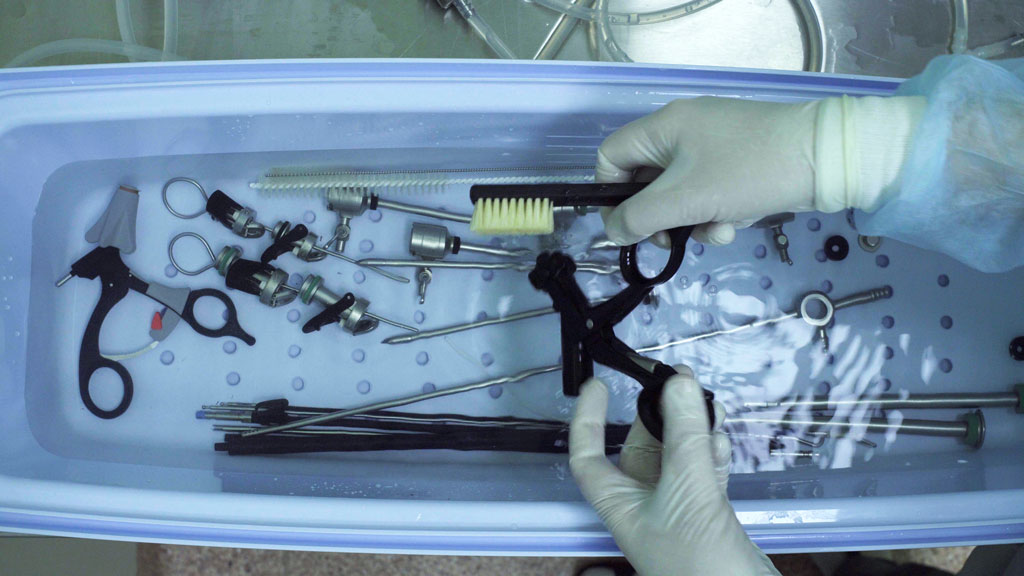
Surgical instrument staining isn’t just a cosmetic concern, it’s a warning sign. Whether it appears as reddish rust, chalky residue, or rainbow discoloration, staining is often the result of overlooked steps in reprocessing or breakdowns in intraoperative handling. If left unaddressed, stains can lead to instrument corrosion, OR delays, and most importantly patient safety risks.
This article combines the latest insights from ANSI/AAMI ST108, industry best practices, and point-of-use strategies to help perioperative teams eliminate staining from the moment an instrument leaves the field to the end of the sterilization cycle.

Understanding the Root Causes of Instrument Staining
- Water Quality Issues: Hard water with excessive calcium and magnesium can leave white mineral deposits. Poorly filtered steam can carry boiler chemicals onto instrument surfaces, causing discoloration or corrosion.
- Improper Cleaning Agents or Incomplete Rinsing: Detergents or enzymatic cleaners not properly rinsed off can interact with sterilants and cause spotting or film buildup.
- OR Products That Trigger Corrosion: Common intraoperative substances, like saline, betadine, blood, or bone cement, can stain or etch metal if not removed immediately.
- Delayed Cleaning: Letting blood or protein soils dry onto surfaces initiates oxidation and staining, making sterilization less effective and increasing the chance of microbial retention.
Point-of-Use Pre-Cleaning: The OR’s Role in Instrument Preservation
- Wipe Instruments During Procedures: Use sterile water (never saline) to wipe gross soils from instruments as they are passed off.
- Flush Lumens and Channels: Suction tips and other lumened instruments must be flushed during the case to prevent occlusion.
- Keep Instruments Moist Post-Procedure: Cover instruments with a damp towel or apply an enzymatic pre-treatment spray to prevent drying.
- Avoid Saline: Saline is corrosive to stainless steel and should not be used for rinsing or soaking.
- Promptly Transport to Decontam: Moisture retention during transport is critical to minimizing corrosion risks.
ANSI/AAMI ST108: Water Quality as a Patient Safety Standard
ST108 categorizes water into Utility Water, Critical Water, and Steam, each with specific quality requirements. The standard mandates a multidisciplinary water management plan with shared responsibilities across departments.
Roles and Responsibilities According to ST108
| Department | Responsibilities |
| Facilities Management | Manages water treatment systems (e.g., softeners, RO/DI), steam generation, boiler chemicals, scheduled water testing, and system distribution integrity. |
| Biomedical Engineering | Performs verification and calibration of washers, sterilizers, and ensures equipment operates within spec. |
| Infection Prevention | Validates microbial and endotoxin control, interprets water quality results, assesses risks during excursions. |
| Chemical and Equipment Manufacturers | Provide water quality validation for products and assist in troubleshooting. |
| Risk Management | Tracks adverse events tied to staining or sterility failures, supports regulatory reporting. |
| Executive Leadership | Ensures investment, approves water management plans, and fosters cross-department accountability. |
| Sterile Processing | Verifies water specs, oversees daily cleaning, and documents staining or quality issues. |
Final Thoughts: From Stains to Standards
Staining is preventable through standards-based practices, collaboration, and vigilance. Point-of-use pre-cleaning and ST108 compliance protect both instruments and patients.
– Juan Miguel Ramos is a sterile processing and surgical services executive who was a contributor to ANSI/AAMI ST108.