By Don Sadler
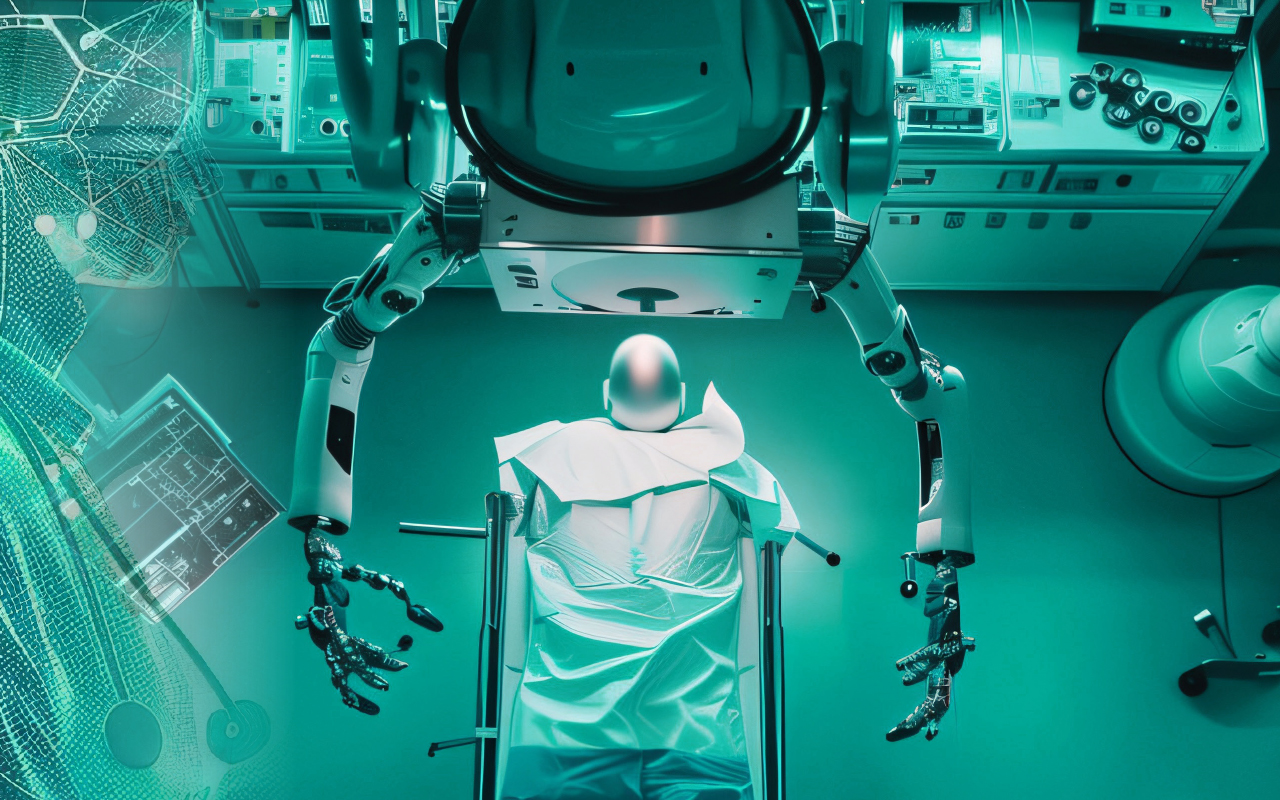
As the calendar flips to 2025, artificial intelligence (AI) is making its mark in almost every corner of business and society. This includes the operating room, where AI and machine learning (ML) are being integrated to improve decision making, predict surgical complications and case durations, automate documentation and streamline the perioperative workflow.

“Artificial intelligence is being used in health care settings and the operating room is no exception,” says Justin Fontenot, DNP, RN, NEA-BC, FAADN, the editor-in-chief of Teaching and Learning in Nursing. “Deep neural networks, advanced machine learning and the release of AI chatbots based on this technology are changing our society, including health care and the OR.”
“The use of artificial intelligence and machine learning in the OR is becoming increasingly prevalent, with 85 to 90 percent of health care systems having some type of AI strategy,” says Lillian H. Nicolette, MSN, RN, CNOR, consultant/partner with Perioperative Consulting LLC. “The market for surgical robotics and coronary artery surgery is up significantly and continues to grow.”
Fontenot says that rollout of AI and ML varies according to the health care setting. “For example, rural hospitals may not have funding to access this advanced technology,” he says. “Studies suggest that a growing number of institutions are experimenting with pilot programs incorporated into perioperative workflows; however, widespread adoption is still pending.”
Reduced Surgical Risk & Improved Outcomes
AI can analyze large amounts of information in much less time than humans can.
“This reduces surgical risk and can even optimize anesthesia dosages,” says Fontenot.
In addition, AI-powered imaging technology can aid in minimally invasive surgery, “providing surgeons with highly detailed, real-time images that reduce risks and improve accuracy,” says Fontenot.
Perhaps the greatest potential for artificial intelligence and machine learning in the OR lies in their ability to improve patient safety and surgical outcomes.
“AI and ML are redefining surgical safety by making processes more efficient, providing clear metrics that matter to health care leadership and improving conditions for both surgeons and staff,” says Francis Iula, an executive with Chiefy, a surgical team intelligence platform. “We are seeing measurable gains in workflow efficiency, which impacts financials directly.”
Current systems, says Iula, are built on reactive protocols rather than proactive, real-time interventions.
“We’re doing a lot better, but there’s an urgent need for innovation to bridge gaps in safety protocols and make safety a given rather than an aspiration.”
According to Iula, current protocols don’t leverage real-time data, predictive models or even automated decision-making tools.
“They rely too much on manual input and legacy workflows, which aren’t built for the modern-day clinician,” he says. “If we want real progress toward zero harm, we need systems that predict, adapt to and support surgical teams dynamically, not just by checklists.”
Nicolette lists a number of different ways that artificial intelligence and machine learning can contribute to better surgical outcomes:
- Enhanced surgical precision (e.g., robotic assisted surgery)
- Predicting complications through data collection and analysis, predictive modeling and real-time monitoring during surgery
- Real-time decision support by using intraoperative monitoring of vital signs and other parameters within the perioperative suite
- Utilization of personalized medicine and treatment plans
- Workflow optimization through improved scheduling and resource allocation
- The use of automated documentation in real time
- Advanced imaging analysis using specific algorithms in MRI and CT scanning for diagnosis and treatment
- Post-operative care management
- Training and simulation using virtual reality
“By integrating these applications in total, the perioperative setting may become more efficient and precise, leading to better patient outcomes,” says Nicolette.
Overcoming Challenges and Obstacles
Perioperative teams face a number of everyday challenges such as time constraints, communication breakdowns and last-minute changes and adjustments. Iula says that AI can “bring order to the chaos” by providing real-time updates, managing equipment needs and ensuring that all team members are on the same page.
“AI has the potential to create a more cohesive environment where safety isn’t compromised by speed,” says Iula. He recommends starting with “low-hanging fruit,” or tasks where automation can make an immediate impact. These include scheduling and block time allocation, resource management, and team coordination and communication (e.g., streamlining preference cards).
Iula calls AI a “force multiplier” that can analyze vast amounts of data far beyond human capacity and identify risks before they’re visible to the human eye.
“There’s so much data in health care to be leveraged to improve patient outcomes,” he says. “AI gives health care leaders the hard data they need to make decisions that support patient safety and quality in every procedure.”
Fontenot believes that AI could have major implications in the area of evidence-based practice.
“It takes an average of 15 years for new evidence to reach the bedside, while evidence-based practice uptake in clinical settings currently sits at just 50%,” he says. “This is a big concern for nurse leaders who are instrumental in advancing and sustaining evidence-based practice in clinical settings.”
According to Fontenot, research-based AI platforms such as Elicit can significantly speed the process of research translation in clinical practice. “Using AI to develop evidence-based practice permits automation of tasks that have previously been performed manually, which can speed the translation rate into clinical settings.”
AI tools can accomplish work that takes six months to perform manually in a couple of weeks. “This is a competitive advantage that health care organizations can market to their communities by letting them know how it improves patient safety and care,” says Fontenot.
Varied Uses of AI & ML
Lake Oconee Orthopedics LLC in Greensboro, Georgia, is using artificial intelligence and machine learning in a number of different ways, says Chief Administrative Officer Nyleen Flores, BA, FMSP, CPMSM, CPCS, CPCO, CASC.
“Using machine learning, we can predict patient recovery patterns and customize rehabilitation plans,” says Flores. “This data can help determine whether more aggressive physical therapy or a slower-paced approach is optimal for individual patients.”
Flores’ facility is also leveraging wearable technology and remote monitoring for activity tracking. “Wearable and implanted devices equipped with AI help monitor post-surgery recovery and physical therapy progress,” she says.
For example, these devices can track patients’ steps, range of motion and other indicators, providing doctors with data on patient adherence and progress.
“Our platform monitors patients’ progress prior to and after the post-operative period, which allows us to gather and assess their progress,” says Flores.
Lake Oconee Orthopedics successfully implemented its first “smart knee” in 2024. “This proved to be extremely effective in providing a superior patient experience while delivering actionable and accurate data for discussion of the patient’s post-surgical progression,” says Flores.
The facility is also using AI and ML to improve administrative efficiencies, such as appointment scheduling, billing and insurance.
“AI tools help us optimize scheduling by predicting how long each type of appointment might take, ensuring efficient patient flow,” says Flores. “This minimizes patient wait times and helps our practice run on schedule.”
Meanwhile, machine learning models analyze claims and scrubs for coding errors to streamline billing processes, detect errors and reduce claims denials. “This helps the practice manage finances more effectively while increasing the timeliness of reimbursements,” says Flores.
AI and ML are also playing a role in patient encounters. “They’re being used to listen to patient conversations in the room with the physician and complete the SOAP note, enter diagnoses, order tests, log injections, prepare referrals and accurately record patient medical histories,” says Flores. The result is greater accuracy and completion of notes in a more timely fashion.
“All of this, if used properly and in conjunction with the human touch, will assist with quality enhancement and provide a superior patient experience,” says Flores.
Obstacles to Implementation
While use of artificial intelligence and machine learning in the OR is becoming more common, there are barriers and obstacles to widespread implementation. These include data privacy and security, integration with existing systems, training and subsequent adoption, potential bias in AI algorithms, and the high cost of implementation.
“Some health care professionals and providers may be resistant to adopt AI in clinical settings due to a fear of job loss or displacement,” says Fontenot.
However, Iula stresses that AI is a support system, not a replacement. “It’s designed to take on repetitive, data-intensive tasks, freeing up perioperative staff to focus on patient care,” he says.
Iula acknowledges that there’s skepticism among some perioperative professionals about using AI and ML in the perioperative setting.
“This is understandable because AI is new and change isn’t easy,” he says. “But once people see how AI can make their lives easier without diminishing their role, the lightbulb goes on.”
The key is to build trust by demonstrating clear, tangible benefits.
“Most of the hesitation centers around AI making clinical decisions,” says Iula. “However, AI’s real potential lies in non-clinical areas like scheduling and systems improvement.”
Nicolette says successful preparation for artificial intelligence and machine learning in the OR should include training and education, combined with hands-on experience and participation.
“It’s imperative to stay up to date on the latest trends in artificial intelligence and machine learning,” she says. “Communication with the team is also critical during the integration process, as is adaptability by practitioners.”
Influencing Positive Adoption
Fontenot believes that perioperative nurses are in a unique position to influence the positive adoption of artificial intelligence and machine learning in the OR. However, nurses need adequate opportunity to voice their opinions about rollouts of the technology.
“To prepare for the inevitable, nurses should work to establish a panel of experts to guide and provide feedback on pilot programs, working collaboratively with technology associates and the IT department,” says Fontenot. “Additionally, nurses can begin to prepare by taking free online courses to learn more about the technologies and how they will affect health care.”
A nurse’s primary concern, of course, is advocating for patients under their care.
“As such, perioperative nurses must speak up and have active roles in the creation of hospital policies and procedures, with the patient at the center of all considerations,” says Fontenot.
Iula stresses that adoption of artificial intelligence and machine learning in health care isn’t a sprint – it’s a gradual integration.
“Start small, deliver undeniable value and let professionals see how these technologies can elevate their work,” he says. “Ultimately, the goal is a seamless partnership between human expertise and AI efficiency.”