By Don Sadler
There is a growing interest in surgical missions among many perioperative professionals today. The concept of medical missions, however, goes all the way back to the 18th to late-19th centuries.
A few of the early pioneering nurses of medical missions and the countries where they served were Florence Nightingale (Turkey), Linda Richards (Japan), Elizabeth Bernard (China), Kate Marsden (Bulgaria) and Frances Piggott, who helped train more than 8,400 nurses to care for patients in the colonies of the United Kingdom.
A Surgical Missions Veteran

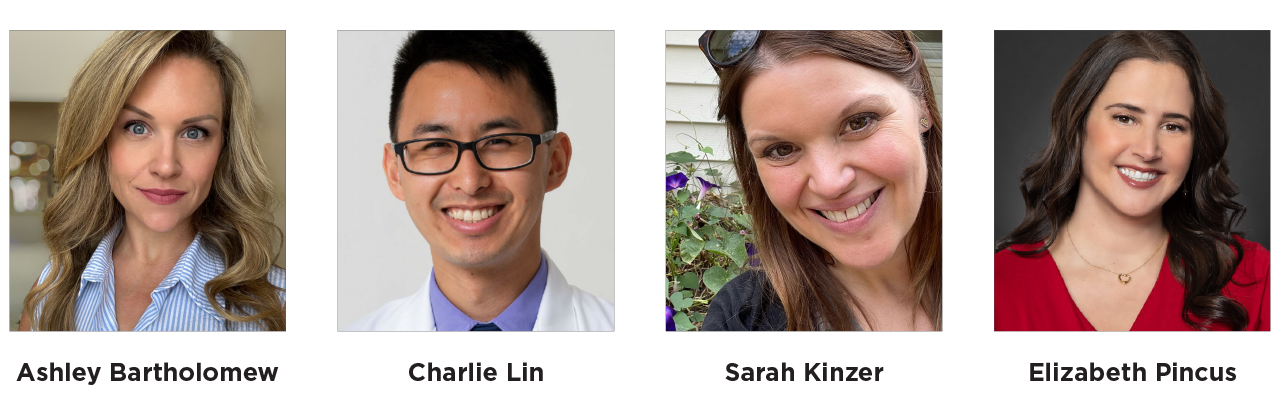
Charlie Lin, MSN, APRN, NP-C, CNOR-PEDS, CRNFA, CNAMB, FCN, has been on more than 30 surgical missions trips over the past 12 years. Lin is a family nurse practitioner and RN first assistant, Pediatric Otolaryngology-Head & Neck Surgery at Stanford Medicine in Palo Alto, Calif. He is also adjunct faculty, RN First Assistant Program-Delaware County Community College.
Lin says his most impactful mission trip was the very first one, when he went to Port-au-Prince and saw the devastation and residual effects following the catastrophic 2010 earthquake in Haiti with his own eyes.
“My perspective on life in Haiti and surgical missions was challenged by my encounters with each child and family,” he says.
“Everyone expressed deep and sincere appreciation for our care, a feeling that seemed almost foreign for a nurse working in the emergency department like me,” says Lin. “This initial experience set the precedent for more than 30 future mission trips where I saw the collective hearts of each team member focused on the safe care of every patient and family we served.”
In fact, surgical missions were the reason Lin decided to make the transition from an emergency department nurse to a perioperative nurse.
“After returning from my first surgical missions trip as a pre-op/PACU nurse, I was reminded how thankful our patients were and the extent of the long-term impacts of our surgical care,” says Lin. “I returned with a new appreciation that OR nurses did more than sit in the corner of a room during surgery, and I sought perioperative opportunities.”
Switching to OR Nursing
Ashley Bartholomew, BSN, RN, CNOR, ONC, went on her first medical mission trip to Cambodia when she was a dental assistant in 2005.
“While it was such a privilege to contribute as a dental assistant, I continued to think about how much more I could do for patients if I was a nurse on that trip,” she says. “Fast forward to today and I’m now an OR nurse specializing in orthopedics.”
In 2023 and 2024, Bartholomew went to Guatemala for a week each time to do total joint surgeries with a team of orthopedic surgeons.
“I was hesitant at first – I had a lot of questions and I was curious about the conditions and the risks associated with a total joint surgery overseas,” she says. “I was pleased to learn that their follow-up care was provided by a continual rotation of orthopedic surgeons who come to the same location, and that the surgical infection rates are surprisingly low.”
Bartholomew remembers one patient in particular on her most recent trip: a young man who lost his family in an accident and lost part of his leg. “He was so hopeful and optimistic in the post-op ward,” she says. “In a selfish way, this gives me so much perspective – the resilience of people in such difficult situations and the hope they maintain.”
On this trip, Bartholomew and her team saw 78 patients in just four days. She considers going on surgical mission trips to be a humbling experience and “a small part of something so life-changing for so many people. We live in a country with so much and going to Guatemala makes every worry I have seem very small.”
Patient Safety is Paramount
Elizabeth Pincus, MSN, MBA, RN, ACNS-BC, CNS-CP, CNOR, is a clinical nurse specialist at Stanford Health Care in Palo Alto, Calif.. She has gone on two surgical mission trips to Peru with Global Smile Foundation (GSF), which repairs cleft lip and palates.
“On my first trip I traveled with a coworker who was also a first-timer, and knowing someone else on the trip was reassuring,” she says.
After meeting the rest of the team during a flight layover in Miami, Pincus says she quickly learned that she didn’t need to know anyone else to have a fantastic experience.
“We started with our first official team meeting, did our emergency and safety training and learned the protocols and process,” says Pincus. “The process was very detailed and precise and included numerous safety checks. We had our clinic day and got all of our OR supplies ready while the doctors screened patients and planned the surgical cases for the week.”
Pincus says the ORs in Peru were beautiful.
“It was interesting to see the differences between surgery in Peru and surgery in the U.S.,” she says. “I was impressed with the strict adherence to safety protocols, including the surgical time-outs. Patient safety was of utmost priority and taken very seriously. I wish every other OR I worked in took communication and safety this seriously.”
On the last day of the trip, all the patients returned for post-op visits.
“The beautiful smiles and grateful hearts were so rewarding,” says Pincus. “When I left Peru, I felt I had done something worthwhile and made a difference in many children’s and their families’ lives. I was ready to return the following year, which was even more remarkable because I got to see all the patients from the first year. They had grown and were thriving.”
‘It’s the Least I Can Do’
Over the past decade, Sarah Kinzer, RN, BSN, alumnus CCRN, has gone on surgical mission trips to Haiti, India, Zimbabwe, Belize, Cameroon, Senegal and Sierra Leone with two organizations: LEAP Global Missions and Mercy Ships.
“There is a great need for surgical missions all around the world and I have a skill set and training that allows me to make a difference in the lives of people who may otherwise not have these opportunities to receive care,” says Kinzer. “I believe it’s the least I can do. The sacrifice will always be more than worth it.”
Kinzer says that most of the patients she has served on mission trips live hidden lives due to deformities or are suffering in pain, just waiting for help and hope.
“They are some of the world’s most compromised and forgotten poor,” she says. “Getting the surgeries they needed is forever life changing for them. To be a part of helping bring them back into life, hope and healing – there are simply no words for this.”
One little girl in Zimbabwe stands out in Kinzer’s memory.
“Mutsa was severely burned from her waist to her neck in a kitchen stove accident and both of her hands were unusable. Her fingers were webbed and swollen and she had trouble gripping anything or even holding a pencil,” Kinzer explains.
“Our surgical team was able to release the contracture to her right elbow, allowing her use of her right hand,” says Kinzer. “Mutsa returned for follow-up surgeries every year for several years, and with healing and determination, she regained use of both of her arms and hands.”
Kinzer first met Mutsa when she was 12 years old and wished her a tearful farewell just after her 16th birthday.
“Mutsa holds a very special place in all our hearts,” says Kinzer. “I’ll always remember her last procedure and the handmade card that read, ‘Happy to be operated. Thank you for loving me. May the Lord bless you and give you more love to save the world. I love you, Mutsa.’ ”
“I still well up when I look at the card,” says Kinzer. “Before our goodbye, Mutsa shared with me that her dream is to one day be a doctor and help others who are in need.”
Ideal Characteristics for Volunteers
According to Lin, the ideal characteristics of a perioperative nurse who wants to go on a surgical mission trip include the following:
- Competency and clinical skill
- Adaptability, flexibility and innovation, especially in an unfamiliar environment
- Awareness and conservation of resources
- Resilience in the face of hardships and distractions
- Open-mindedness, sociability and humor
On the flip side, less-than-ideal characteristics include questionable motives, rigid expectations, inflexibility, cultural insensitivity and introversion.
Lin also stresses the importance of empathy, which is different from sympathy, along with self-examination and awareness.
“Empathy is the ability to place oneself in another person’s situation and look at their condition through their perspectives, emotions, actions and reactions,” he says. “Volunteers have to set aside any biases they might have in order to effectively deal with patients and their families.”
Learning to listen and being sincere are also important. “This includes seeking to understand patients’ and their families’ fears and coping skills,” says Lin. “Volunteers need compassion, which is a virtuous response that seeks to address the suffering and needs of a person through relational understanding and action.”
There are also some ethical considerations for nurses to consider before embarking on a surgical mission trip, says Lin. These include patient selection/informed consent, risks of equipment use and medications (including anesthesia and sterilization), customs (e.g., bribes vs. fees), post-operative management and follow-up resources, and cultural variations, including practice norms and legal prohibitions.
In addition to serving as a medical volunteer, Lin says there are a number of other ways to participate in a surgical mission trip. For example, you can help pack and sort medical equipment, help raise funds for trips, assist with trip planning or serve as a translator.
Logistically speaking, Lin stresses the importance of securing your passport and/or visa well in advance of your trip and making sure all your immunizations are up to date – especially hepatitis, malaria and typhoid. “Also plan to pack medications such as analgesics, antibiotics and anti-diarrhea medication,” he says.
Surgical Mission Tips and Advice
Before joining a surgical mission trip, Pincus recommends researching the organization to make sure they’re reputable.
“Be very clear about what you will fund versus what the organization will fund,” she says. “And be sure to find out details on the housing arrangements as these vary drastically based on the group and the location.
“In other words, make sure you understand exactly what you’re signing up for,” says Pincus, who plans to return to surgical missions when her daughter is older.
“Once you go on one trip, you’re hooked,” she says.
Lin advises nurses to “self-assess if the timing is appropriate for you to participate in a surgical mission trip, while also examining your motivations. Also take the time to research cultural customs of the country and people group to increase your care competency. Be open-minded because not every country has the same customs, cultures and resources.”
“Most importantly, don’t forget that it takes a team to help a patient dream for the future,” says Lin.
Kinzer urges perioperative nurses to strongly consider going on a surgical mission trip.
“Although it is a sacrifice, it’s so very worth it,” she says. “It requires being flexible and open to doing things out of your norm.
“The travel can be long and arduous, the work can be hard and the days can be long,” says Kinzer. “But know that the sacrifice is always worth it and you are a blessing to those who are in need of your help and care.”
Bartholomew says she’d like to go on a surgical missions trip every year, but it’s difficult with three school-aged children and a husband who serves in the military. “But I know the logistics, money and effort are truly for a good cause and I’m thankful to be a part of that,” she says.
Lin feels fortunate that “philanthropy through humanitarian surgical missions remains the cornerstone of my clinical practice that’s focused on making life better for patients,” he says. “My first surgical mission trip has continued to pave the way for my rewarding nursing career and calling.”