By Grace O
Here are some vegetables to enjoy this fall season. Vegetables in general are full of valuable FoodTrients including vitamins, antioxidants, fiber, and minerals that all contribute to aging beautifully.
Arugula
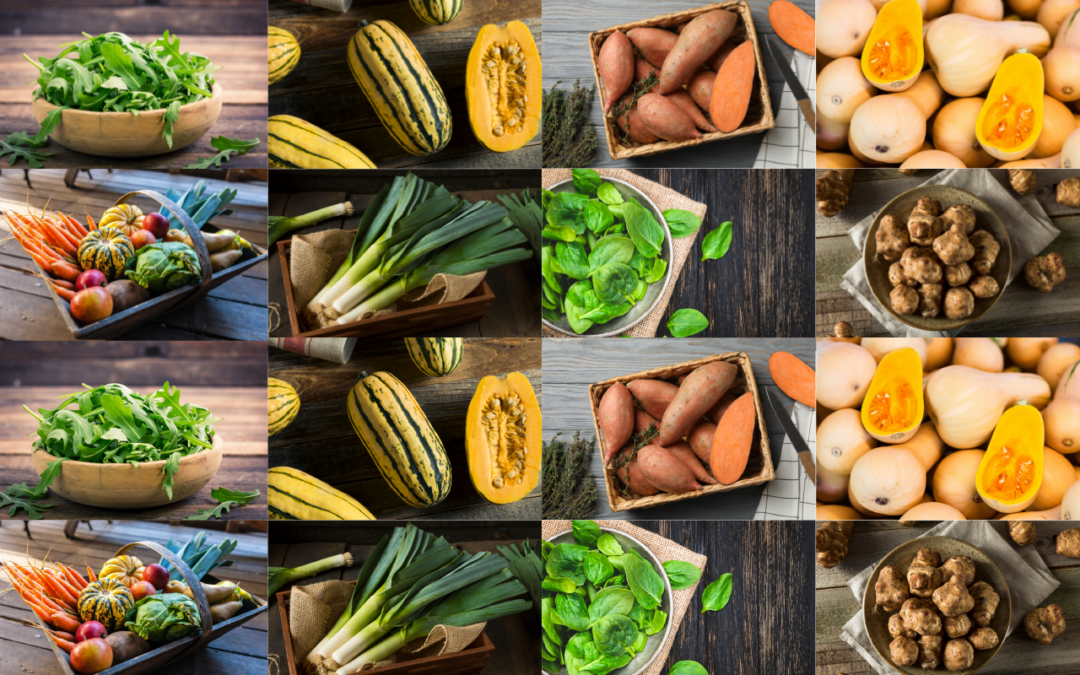
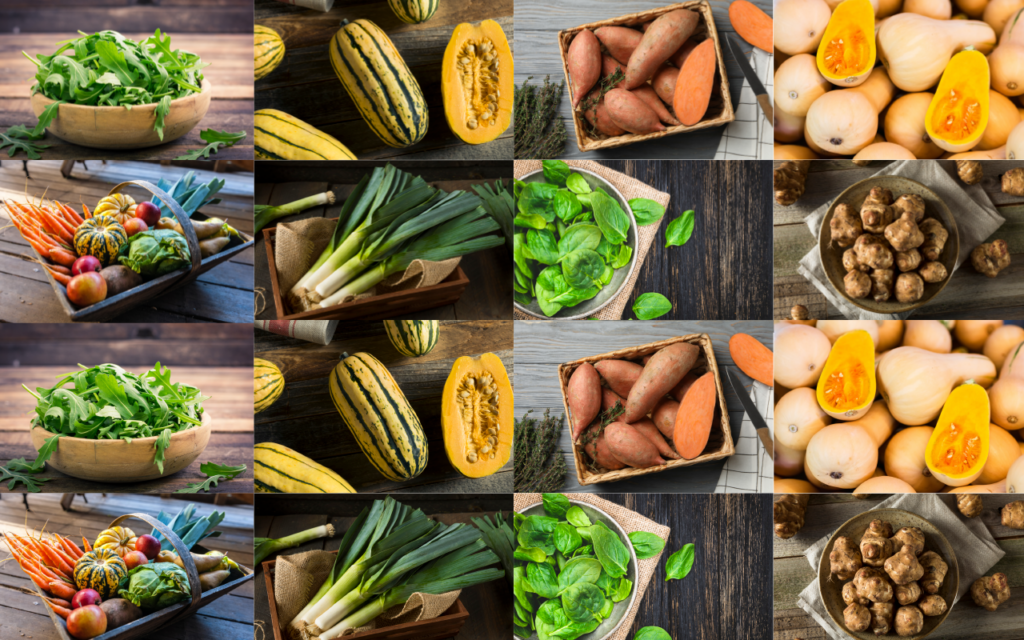
Arugula is a cool weather peppery green that grows well in many places during autumn. It’s actually a member of the cabbage and mustard green families, so it offers a good dose of antioxidants for protection against damage to cells. The slightly bitter taste of arugula is due to the presence of glucosinolates, which may protect against certain cancers, including breast, prostate, lung, and colon cancers. You can toss arugula into almost any salad or pasta dish for added nutrition.
Delicata Squash
If you have never had Delicata squash, you’re in for a treat! About five-to-nine inches long and one-and-a-half to three inches in diameter, Delicata squash has a scalloped shape and beautiful green and orange stripes. The deep yellow-to-orange flesh tastes something like a sweet potato crossed with butternut squash. When roasted or steamed, even the skin is edible. Delicata is delicious stuffed with breadcrumbs, chestnuts, and herbs, or cut into small chunks to be added to rice or couscous. Nutritionally it’s a good source of potassium, iron, and vitamins A and C.

Honeynut Squash
A recent addition to the fall/winter squash family, Honeynut squash was bred from butternut and buttercup squash in the 1980s. It has a similar shape and flavor to butternut squash but is about half the size and is considerably sweeter. It has dark tan-to-orange skin and orange fleshy pulp. It has two-to-three times more beta-carotene than butternut squash. Honeynut squash can be roasted, sautéed, puréed, added to soups, stews, and braises, and is even sweet enough for desserts.
Jerusalem Artichoke/Sunchoke
A sunchoke (also known as a Jerusalem artichoke) is the thickened underground part of the tuberous stem of a breed of sunflower. This vegetable is mildly sweet, crunchy, and nutty, almost like a cross between potato and jicama. It’s available all year round, but best from October to May. Nutritionally, sunchokes are an excellent source of iron, potassium for regulating blood pressure, calcium, magnesium, and fiber. They can decrease blood cholesterol and are high in protein. They are also low in calories and are a good substitute for potatoes and other starchy root vegetables.
Leeks
Leeks are in the allium family, so they’re related to garlic, chives, shallots, and onions. They have a sweet, oniony flavor that adds depth to soups, stews, and pasta dishes. Grilled or roasted, they make a delicious side dish. They’re at their best in the fall and spring. Nutritionally, leeks are rich in flavonoids. Flavonoids are antioxidants and studies suggest that they provide anti-inflammatory, anti-diabetic, and anticancer benefits.
Spinach
Spinach is a nutritious leafy green vegetable that originated in Persia. Interestingly, it belongs to the amaranth family, which includes beets and quinoa. Though available year-round, the leaves are sweetest and most tender in the fall.
Spinach is an excellent source of vitamins and minerals. It’s high in carotenoids, which your body can turn into vitamin A. It’s high in vitamin C, which is a powerful antioxidant that promotes skin health and immune function. It’s a good source of vitamin K1, which is essential for blood clotting. Just one spinach leaf holds over half of your daily needs! It also supplies folate or vitamin B9, which is vital for pregnant women and essential for normal cellular function and tissue growth. Spinach is an excellent source of iron, which helps to bring oxygen to your body’s tissues as well as calcium, which supports bone health and is crucial for your nervous system, heart, and muscles. These nutrients in spinach decrease oxidative stress, improve eye health, and help prevent heart disease and cancer.
Sweet Potato
People frequently use the terms “yams” and “sweet potatoes” interchangeably. Yams have brown, rough bark-like skin and dry, white flesh while sweet potatoes are an entirely different vegetable. Sweet potatoes are elongated and have relatively smooth skin. Native to Central and South America, they come in a variety of colors including the familiar maroon skin with orange flesh, maroon with creamy white flesh, and purple with purple flesh. There are various combinations in between. Sweet potatoes are highly nutritious, containing large amounts of vitamin A and beta carotene (depending on the color), calcium, protein, and fiber. Sweet potatoes are available all year round (commercial growers can store them for months), but each year’s new crop is available in fall/winter. Sweet potatoes can be used as side dishes, as salads, and even for dessert. Many athletes roast them, slice them, and eat them as a snack after their run or workout.
– Grace O is the creator of FoodTrients, a unique program for optimizing wellness and longevity. She is the author of three award-winning cookbooks. Her latest cookbook is “Anti-Aging Dishes from Around the World.” Learn more at FoodTrients.com.